So, how long does 3GB of data actually last when you’re on the road? For most travelers, a 3GB data plan is a solid choice for a trip lasting anywhere from a few days up to a full week.
It really comes down to your digital habits. If you’re mainly using your phone for maps, messaging, and a bit of light browsing, you could easily make 3GB stretch over a 7-day holiday. On the flip side, if you’re streaming videos or constantly uploading high-res photos, you’ll burn through it much faster.

Trying to pick the right data plan for a trip can feel like a guessing game. Nobody wants to pay for a massive data bundle they won’t even touch, but the thought of running out of internet right when you need it most is a modern traveler’s nightmare.
This is where a 3GB plan often hits that perfect sweet spot, especially for shorter trips. It gives you more than enough data for all the essentials without costing a fortune.
Think of 3GB as your trusty travel companion. It’s ideal for navigating the winding streets of a new European city, pulling up restaurant reviews in Asia, or just sending updates to family back home. It provides the freedom to handle the important stuff on the fly, like booking a ride-share or checking into your next flight, without constantly searching for Wi-Fi.
To really get a feel for it, let’s break down what 3GB looks like in terms of real-world use. It gives you a generous amount of time for low-to-medium data activities, but be warned—it gets eaten up very quickly by high-demand tasks like video streaming.
This balance is exactly what makes it such a great choice for savvy explorers. You can rely on it while you’re out and about, then switch over to the hotel Wi-Fi for any heavy-duty downloading or streaming in the evening.
Here’s a quick summary to help you picture just how far 3GB can take you on your travels. It’s a handy reference for planning your data usage.
| Activity | Estimated Time with 3GB |
|---|---|
| Web Browsing | Around 35-50 hours |
| GPS Navigation (Google Maps) | 100+ hours |
| Social Media (Scrolling) | 20-25 hours |
| Music Streaming (Spotify) | 60-70 hours |
| Video Calling (WhatsApp/FaceTime) | 3-4 hours |
| HD Video Streaming (YouTube/Netflix) | Just 1-2 hours |
As you can see, your data allowance goes a long way with everyday tasks like navigation and browsing. But once you fire up Netflix for an episode of your favorite show in HD, that 3GB will disappear in a flash.
When you’re traveling, thinking about your data allowance is a bit like managing a budget. Some things you do online are like buying a coffee – they barely make a dent. Others are like a Michelin-starred dinner – they’ll burn through your allowance in no time. The trick to making your data last is simply knowing which is which.
Think of your 3GB plan as a full tank of fuel for a road trip. Sending a few WhatsApp messages or checking your email is like cruising on the highway—super efficient. Streaming a Netflix show in HD? That’s like flooring it up a steep hill. You’ll see the gauge drop fast.
It also helps to put a 3GB travel plan into perspective. Back home, you might not even think about data. In fact, some sources suggest the average mobile user gets through a staggering amount of data every month, with a huge chunk of that going to video alone. Your 3GB travel eSIM is just a sliver of that, so a small change in your online habits is all it takes to make it last the whole trip. You can read more about global mobile data trends if you’re curious.
Let’s break down your typical travel activities into three simple groups. This way, you’ll know exactly what you can do without a second thought, and what’s best left for the hotel’s free Wi-Fi.
Low-Drain Activities (Go for it!)
These are the daily essentials that won’t give your data allowance any trouble.
Medium-Drain Activities (Use, but keep an eye on it)
These are the things you’ll probably do most often. They’re perfectly fine in moderation, but they can add up over the day.
High-Drain Activities (Wait for Wi-Fi!)
These are the real data hogs. A few minutes of these activities can wipe out a surprising amount of your 3GB plan. Seriously, save these for a solid Wi-Fi connection.
- Streaming video (HD/4K): An hour of watching YouTube or Netflix in high definition can easily gobble up over 1GB.
- Video calls: A clear FaceTime or Zoom call with friends back home is heavy on data.
Let’s be honest, “3GB” is a pretty abstract number. It doesn’t tell you much when you’re desperately trying to find the best gelato in Rome or send a photo from a beach in Thailand. What travelers really need to know is what those gigabytes actually get you in terms of real-world use.
Getting a handle on this helps you pick the right data plan and completely sidesteps the stress of seeing that dreaded “data running low” notification pop up mid-adventure.
For most essential travel tasks, a 3GB plan is surprisingly generous. It gives you plenty of juice for navigating, a bit of browsing, and keeping in touch. The main thing to watch out for is entertainment – video streaming, in particular, is the real data guzzler.
To make it clearer, think of your data usage in three categories: low, medium, and high.
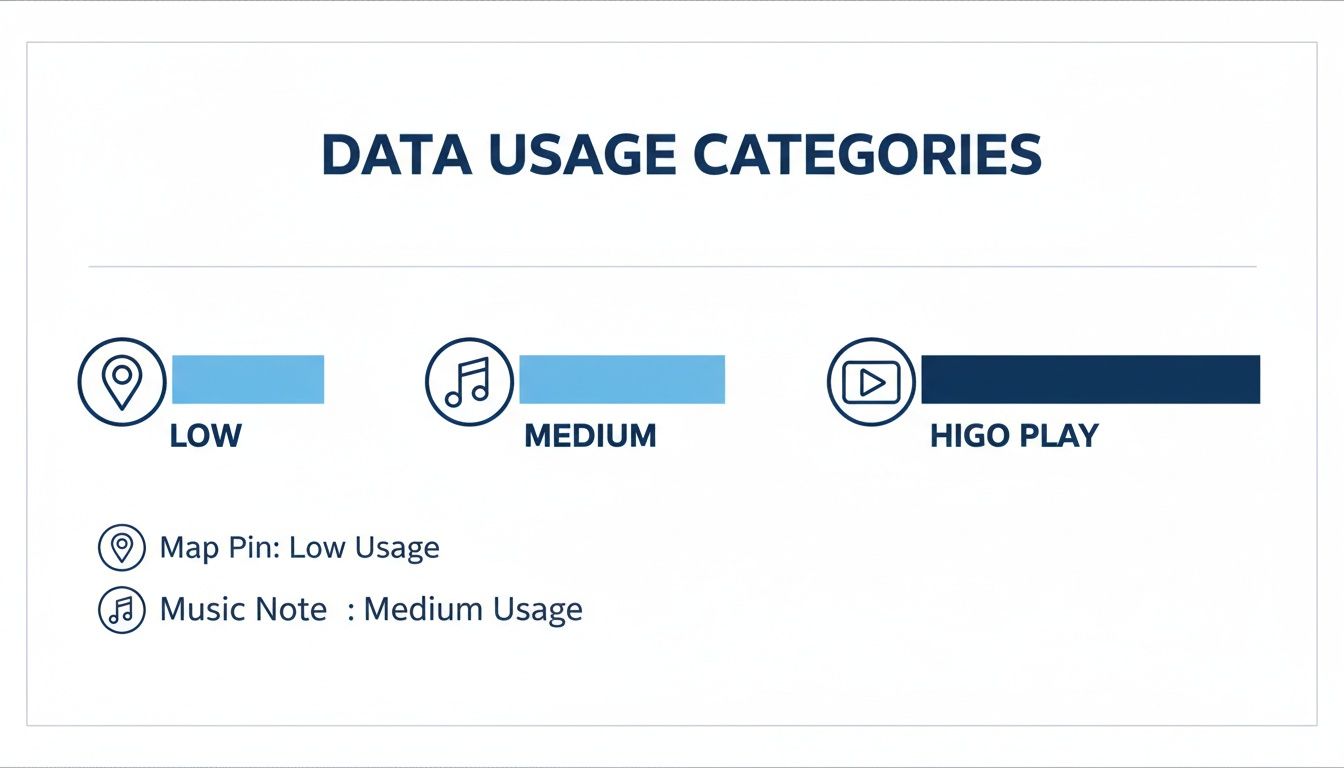
As you can see, activities like using maps barely make a dent, while streaming video will burn through your allowance much, much faster.
To give you a proper feel for it, let’s break down exactly what you can do with a 3GB data plan. These are solid estimates that should give you a great starting point for planning your trip.
The bottom line? For a typical week-long trip where you’re out exploring during the day and using hotel Wi-Fi in the evenings, 3GB is often the perfect amount. It covers all the on-the-go essentials without forcing you to constantly monitor your usage.
It’s also useful to see how a 3GB travel plan stacks up against what you might use at home. Globally, the average person’s mobile data usage is rising steadily. A 3GB plan might only last a heavy user a few days back home.
But here’s the thing: we use our phones differently on holiday. We’re not commuting and streaming Netflix for an hour each way. By focusing on efficient apps and jumping on free Wi-Fi when it’s available, that same 3GB can easily last an entire week away.
Once you know what uses up your data, you can choose a plan with confidence. For many travelers, a 3GB eSIM is the sweet spot – offering a great balance of connectivity and value to keep you online for everything that matters.
So, is 3GB the right amount of data for your next trip? The honest answer is, it really depends on how you travel. No two trips are the same, and what works for one person might leave another stranded without a connection.
To figure out if 3GB is your sweet spot, let’s look at what kind of traveler you are. When you match your data plan to your actual habits, you sidestep the classic travel traps: either paying for a mountain of data you never touch or, worse, running out right when you need it most.
Off for a three-day city break to somewhere like Prague or Lisbon? For a short getaway like that, a 3GB plan is often the perfect travel buddy. It gives you more than enough data to navigate with Google Maps, check tram schedules, post a few envy-inducing photos, and look up the best local restaurants.
On short trips where you’re out and about exploring, 3GB provides plenty of data for all the essentials without you having to worry about overspending.
When you’re traveling for work, staying connected isn’t just a luxury—it’s essential. A 3GB plan can be a great fit here, especially if you know you’ll have reliable Wi-Fi at your hotel or the conference center for the big stuff like video calls or downloading presentations.
This amount of data gives you a secure, private connection for firing off emails, keeping up on Slack, and booking an Uber between meetings. You can stay productive on the move and save the heavy data lifting for when you’re back on the hotel’s network.
Okay, this is where a 3GB plan might start to feel a bit tight. If you’re a digital nomad who’s online for hours doing remote work, or you’re traveling with family and need to stream shows to keep the kids happy, you’ll burn through 3GB in no time at all.
These high-demand situations call for a much larger data package. It’s a good reminder of how different our data needs are on the road compared to back home. Globally, average data consumption per month is on the rise, so for a heavy user, 3GB would barely last a few days. It really shows you need to be a bit more mindful with data when traveling.
Choosing the right plan is all about being honest with yourself about your needs. A smaller plan is perfect for covering the basics, but a larger one buys you peace of mind if you know you’ll be a heavy user.
Ultimately, it all comes down to understanding your own habits. Providers like TapSim offer flexible plans, so you can always find one that fits your trip perfectly. For a bit more help weighing up your options, check out our guide on finding the best eSIM for travel.
Knowing what chews through your data is half the battle. The other half is actively managing it to make sure your 3GB travel plan goes the distance. Thankfully, with a few clever tweaks to your phone’s settings and habits, you can stretch that data allowance further than you’d think, keeping you connected for your whole trip without the stress.
The idea isn’t to stop using your phone altogether; it’s about making it work smarter for you. Most of these data-saving tricks are surprisingly simple and can be sorted in just a few minutes before you even pack your bags.
Your home or hotel Wi-Fi is your best friend before you jet off. Use it to get all your big downloads out of the way, so your mobile data is saved for when you’re actually out and about exploring.
A little bit of prep work can save a massive chunk of your data before your adventure even begins. It’s a simple habit that makes a world of difference.
Your smartphone is packed with built-in tools designed to help you conserve data. It only takes a moment to switch them on, and they can slash the amount of unnecessary data your phone uses in the background.
Pro Tip: One of the biggest secret data drains is background app refresh. This lets apps update content even when you’re not using them. Turning it off for apps you don’t need constant updates from can save hundreds of megabytes without you even noticing.
Another fantastic tool is your phone’s Low Data Mode or Data Saver setting. When you switch it on, it automatically hits the brakes on background tasks and lowers video quality to help you eke out every last megabyte. It’s also a good idea to know how to manage your device settings properly, like learning to turn off data roaming on your iPhone to avoid any nasty, unexpected charges from your home network.
How you use your apps on the go is just as critical as the settings on your phone. A few small, mindful changes can have a huge impact.
Let’s wrap up with a few common questions that pop up when travelers are weighing up a 3GB data plan. Getting these sorted will help you head off on your trip feeling confident and fully prepared.
You absolutely can, but you’ll want to be careful. Think of your phone’s hotspot as a data superhighway—it gets things done fast, but it burns through your data allowance at a serious pace.
Just connecting a laptop for an hour of web browsing can easily eat up a few hundred megabytes. A single video call through your hotspot? That could devour a whole gigabyte on its own. It’s best to save tethering for quick, essential moments, like pulling up an email or checking directions on a bigger screen. Most modern eSIMs, including TapSim, allow you to use your phone as a hotspot, but it’s smart to keep a close eye on your usage in the app so you don’t get caught out.
Running out of data mid-adventure isn’t the disaster it used to be. With a modern eSIM, you can get yourself back online in just a few minutes.
You’ll usually get a notification when your data starts running low. From there, it’s as simple as opening your eSIM app and grabbing a top-up package. The new data kicks in almost instantly, so you’re never left stranded without a connection.
This flexibility is one of the best things about using an eSIM. You can start with a smaller, budget-friendly plan like 3GB, knowing you can easily add more if your trip turns out to be more data-hungry than you planned.
For a lot of people, 3GB is a great amount for a seven-day trip around Europe. It’s pretty much the sweet spot for all your essential travel tasks, like navigating with maps, firing off messages, some light social media scrolling, and booking train tickets or museum passes.
The trick is to be a little savvy. Lean on the free Wi-Fi at your hotel, in local cafés, or at train stations for the heavy-lifting. We’re talking about streaming shows, making long video calls to family back home, or uploading that massive photo dump to the cloud. A 3GB plan is built for exploring, not for binge-watching.
Nope, not at all. Activating an eSIM uses a minuscule amount of data—so little you won’t even notice. The process typically just involves scanning a QR code, which downloads a small profile to your device. The entire file is usually just a few kilobytes.
To be on the safe side, it’s always a good idea to install your eSIM while you’re still connected to Wi-Fi at home. With TapSim, for example, you can get everything set up before you leave, then simply switch on your data plan the moment you touch down. That way, every single megabyte of your 3GB allowance is saved for your actual trip.
Ready to travel without the roaming fee headache? With TapSim, you can get affordable, instant data in over 150 destinations.