eSIM for Business Travel: What to Know
Learn how esim for business travel cuts roaming costs, speeds arrival setup, and keeps teams connected with clear data limits and fewer surprises.

Travelers often wonder what is data roaming, how it works and how to keep bills in check. In this guide, you’ll explore practical steps—from phone settings to eSIM options—that experienced travelers use to stay online affordably.
In this guide:
Data roaming is like your phone borrowing a local network when you step abroad. It keeps maps, email and messaging apps running—but it can also rack up fees per megabyte if you’re not careful.
When you land in a new country, your SIM scans for any available signal. It automatically ‘handshakes’ with a local carrier, much like a guest checking into someone else’s Airbnb.
Default settings let apps update in the background without asking. A forgotten photo backup or map refresh can send your invoice soaring in minutes.
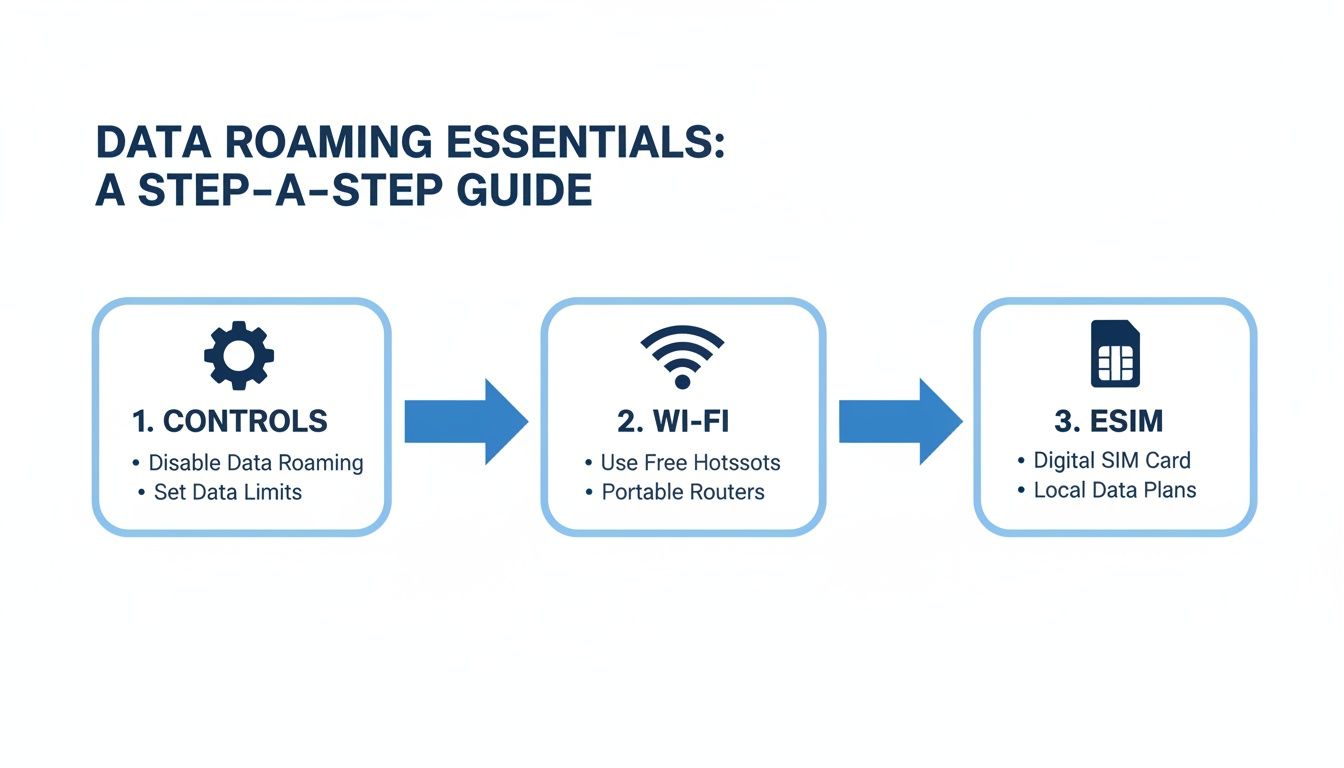
Before you travel, lock down your data usage with this three-point plan:
Here’s a quick overview of the main points:
Data Roaming Quick Summary
| Aspect | Explanation |
|---|---|
| Definition | Phone uses a local network when your home SIM signal is unavailable. |
| Automatic Network Switch | Handshake between your SIM and local carriers shows new operator. |
| Charges | Fees charged per megabyte based on wholesale agreements. |
| Local Data Bundles | Prepaid local plans often offer lower rates than roaming. |
| Default Settings | Background updates and app syncing can drive up costs unexpectedly. |
| Cost-Saving Tips | Disable background data, stick to trusted Wi-Fi, or opt for an eSIM. |
Armed with these essentials, you can stay connected abroad without surprise bills. Next, we’ll explore how data roaming really works behind the scenes.
It’s easy to take for granted that your phone simply works abroad. But each time you cross a border, your data embarks on a carefully choreographed journey.
Imagine your data as a train carriage booking a slot on foreign tracks, steered by carrier agreements. As soon as your device crosses into a new country, it scans for local towers. Then it performs an automatic handshake—an authentication signal that means “I have permission to board.”
At its core, data roaming is your home SIM tapping into foreign networks so you can browse, stream or message from almost anywhere. Since free EU roaming ended, using data abroad often comes with extra fees. Data use on roaming trips has exploded—in some markets, average usage per SIM jumped from 1.26 GB in 2016 to a projected 98.34 GB by 2025.
While you enjoy seamless browsing, carriers negotiate wholesale fees behind the scenes. These deals cover the cost of accessing foreign towers, currency conversion and local taxes.
The silent handshake between your SIM and a foreign network can trigger charges you don’t notice until the bill arrives.
Key cost drivers include:
For strategies to manage these costs, check out our guide on roaming charges.
When you step outside your home network, your phone quietly hooks onto a local carrier. That’s data roaming in action. Yet, without keeping an eye on it, those charges can stack up in no time.
For example, streaming a ten-minute HD video can gobble dozens of megabytes in seconds, leaving your roaming tab much larger than you expected.
Data use on roaming journeys has soared—driven by 5G rollouts and video streaming surges. Video alone jumped from 0.83 GB in 2017 to an estimated 24.76 GB per month by 2021.
“Unlimited at home often feels unlimited abroad—until roaming charges hit.”
Next-generation networks deliver content in a flash, but they also ramp up data consumption. What might have used 300 MB on 4G could easily double on 5G thanks to higher default resolutions.
When EU free roaming ended, many operators reintroduced daily fees and per-unit surcharges. In short, the roaming perks you enjoyed before now come with extra costs at every border crossing.
Read also Check out our guide on AT&T International Day Pass hidden costs.
Understanding these cost drivers lets you monitor your usage and tweak settings—think streaming quality, background syncs and map updates—to avoid nasty surprises. Next, we’ll explore simple phone tweaks that keep your roaming bill under control.
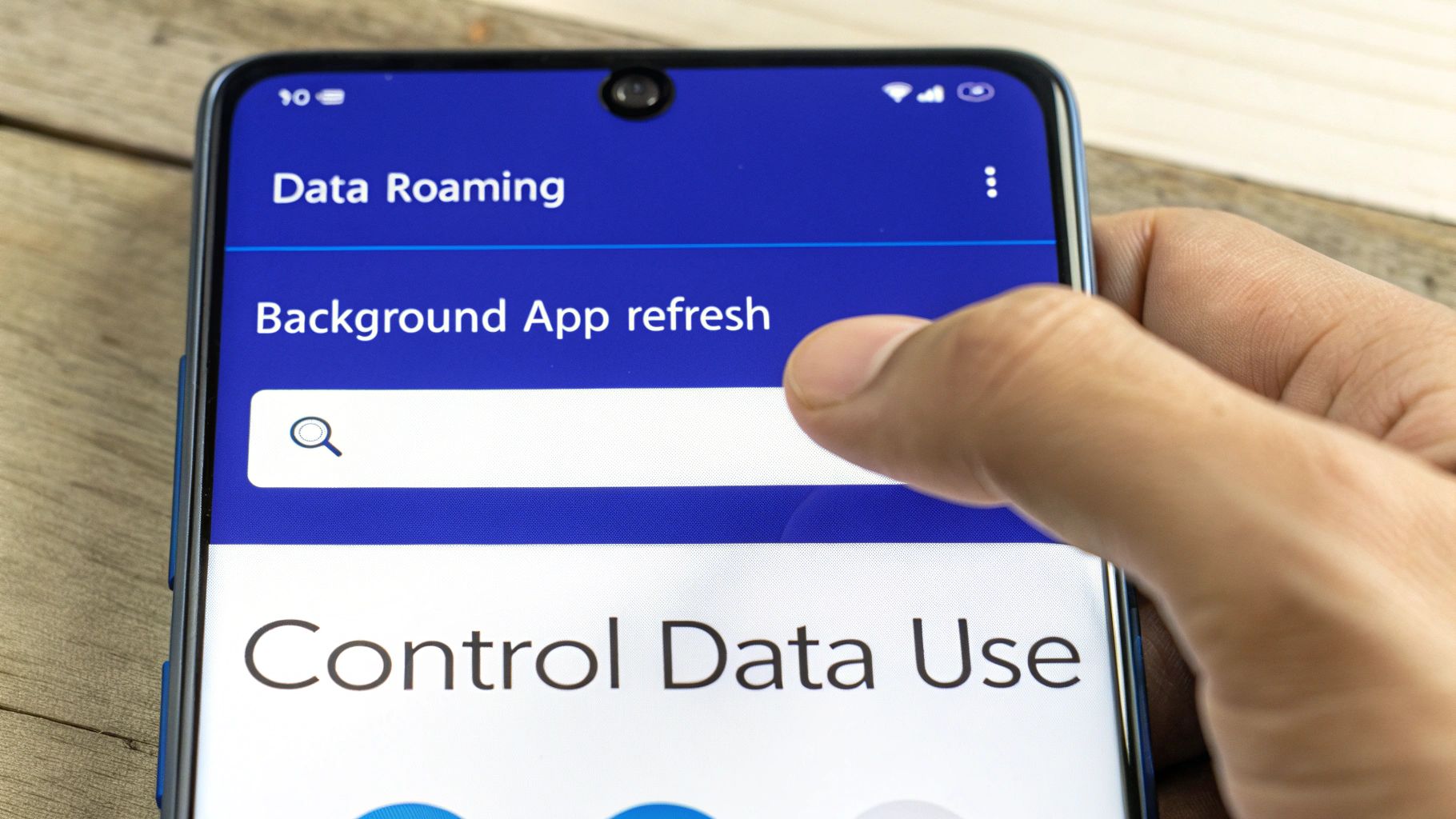
Before you jet off, spending a couple of minutes tweaking your phone can save you from a nasty bill later. Switch off automatic network handovers so your data only runs when you want it to. Then set up warnings and Wi-Fi priorities to steer heavy tasks onto cheaper connections.
“A minute of setup saves hours of worrying over your bill,” says a frequent nomad.
These simple steps ensure you stay in control of your data use.
| Setting Area | iOS Steps | Android Steps |
|---|---|---|
| Roaming Toggle | Settings > Cellular > Cellular Data Options | Settings > Network & Internet > Mobile |
| App Refresh Control | Settings > General > Background App Refresh | Settings > Apps > Background Data |
| Dual-SIM Assignment | Settings > Cellular > eSIM > Default Line | Settings > Network & Internet > SIMs |
When you arrive, switch your dual-SIM mode so that only your travel line carries data.
Most modern handsets let you juggle a physical SIM and an eSIM. By routing data through your travel line, your home SIM stays dormant—and data-hungry apps can’t sneak on board.
These steps make sure your device only pulls data from the source you choose. For iPhone users needing more detail, read our guide on turning off roaming on iPhone: Check out our guide on turning off roaming on iPhone.
It’s easy to forget that apps sync and update behind the scenes, quietly eating into your allowance.
With TapSim, travelers can lock down unwanted data streams before takeoff. Explore TapSim eSIMs right now.
Switching to an eSIM hands you control over your roaming fees before you even leave home. No more surprises on your bill—every cost is visible when you pick a plan.
And since everything lives on your phone, there’s no need to worry about swapping tiny SIM cards or misplacing plastic trays. You settle on a package in seconds and get on with your trip.
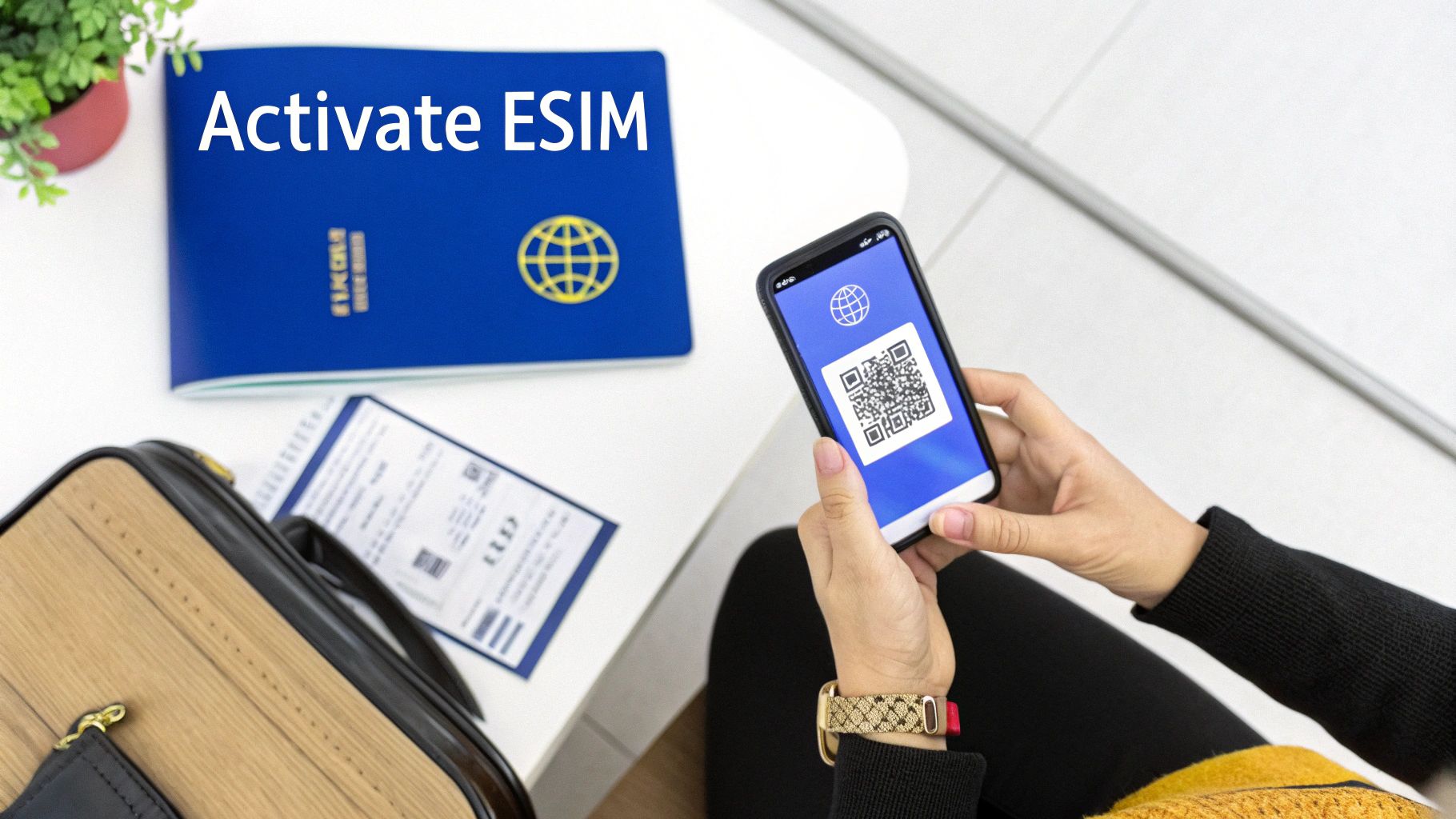
Think of an eSIM as a digital ticket that holds multiple data profiles ready to go. You simply scan a QR code, and moments later your plan springs to life—no physical card required.
“I saved 60% on data costs by switching to an eSIM,” says a seasoned traveler.
| Feature | Physical SIM | eSIM on TapSim |
|---|---|---|
| Setup Time | 1–2 days with shipping | Minutes with QR code |
| Hidden Fees | Often unclear roaming costs | Transparent pricing |
| Coverage | Single carrier per SIM | 150+ networks |
| Top Up | New SIM pack required | On-demand via app |
Jade, a digital nomad from Manchester, traveled across four Asian countries with one eSIM. She activated each plan in under two minutes and sidestepped per-MB roaming traps everywhere she went.
“Using one TapSim eSIM, I saved over £80 on data,” Jade reports.
This real-world result shows that an eSIM is perfect for multi-stop trips. By choosing an eSIM, you keep roaming costs in check and enjoy straightforward support from TapSim.
Check available eSIMs on TapSim.net with full-speed allowances and simple top-ups to stay online without surprises.
Learn more about TapSim’s worldwide eSIMs at TapSim.net.
When the bill lands, it can feel like a leak in your budget. These travelers decided to plug the hole—and came out ahead.
James, a digital nomad, tracked roaming costs across six European countries. Midway through his two-week tour, he switched to an eSIM and slashed his data spend by 60%.
“In one trip alone, I saved over £80 thanks to the eSIM,” James says.
Emma, exploring Rome, discovered the hard way that streaming on the move can be pricey. A single day of video pushed her roaming bill over £50. She now toggles off mobile data and hunts down café Wi-Fi before hitting play again.
Meanwhile, in Bali, Lucas started with a roaming pass at €30 for 1 GB. Mid-adventure he installed a TapSim eSIM—and that same gigabyte cost him just €8.
“It’s amazing how small tweaks can build up into big savings,” Lucas notes.
Here’s a quick look at one day’s data costs. We’ve compared three common options to keep things simple.
| Option | Data Allowance | Estimated Cost |
|---|---|---|
| Roaming Pass | 500 MB | £45 |
| Local SIM | 1 GB | €15 |
| TapSim eSIM | 2 GB | £12 |
This snapshot shows how choosing an eSIM can roughly halve your spend. Whether you grab a local SIM or pick a TapSim eSIM, a bit of planning and the right settings mean zero surprises on your bill. Just watch your network indicators and cap background apps, and you’ll enjoy worry-free data wherever you roam.
As soon as your home SIM latches onto a foreign network, roaming kicks in. That handshake with a local tower typically triggers **per-MB charges. Fees can vary widely depending on both the country you’re in and your specific plan.
Before you travel, open your carrier’s app and look under Data Roaming or International Settings. You should see:
Expert Tip
On public Wi-Fi, always run a VPN to keep your emails, passwords and banking details safe.
Public hotspots are handy but notoriously vulnerable. If you need to check email, manage online banking or transfer files, it’s best to wait for a secured network—or at least use a reliable VPN.
Most modern phones support dual SIM functionality. To add a travel eSIM:
These simple steps help you steer clear of surprise bills and stay in control of your data spend.
Check available eSIMs on TapSim: TapSim
Learn more about TapSim’s global travel eSIMs at TapSim.net