Why Install eSIM Before Travel
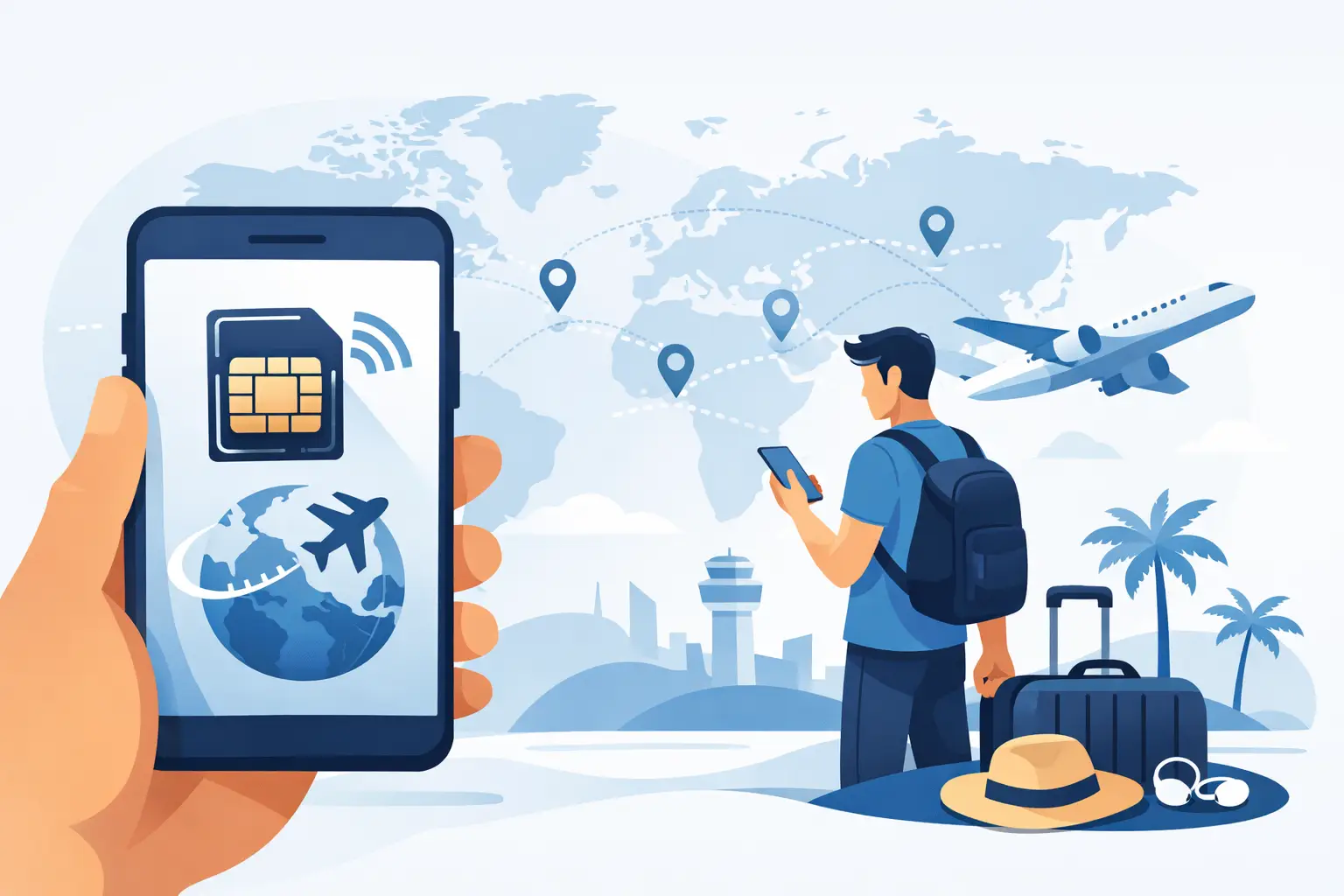
Install eSIM before travel to avoid roaming shocks, airport SIM stress, and setup delays. Get connected faster with fewer surprises abroad.
Ever wondered how your phone magically stays connected when you step off a plane in another country? That’s international SIM card roaming in action. It’s the agreement between your home network and foreign providers that lets you make calls, send texts, and scroll through social media, even when you’re thousands of miles from home.
While it sounds simple, roaming is known for landing travelers with eye-watering bills. It can turn the convenience of staying connected into a major travel headache if you’re not careful.
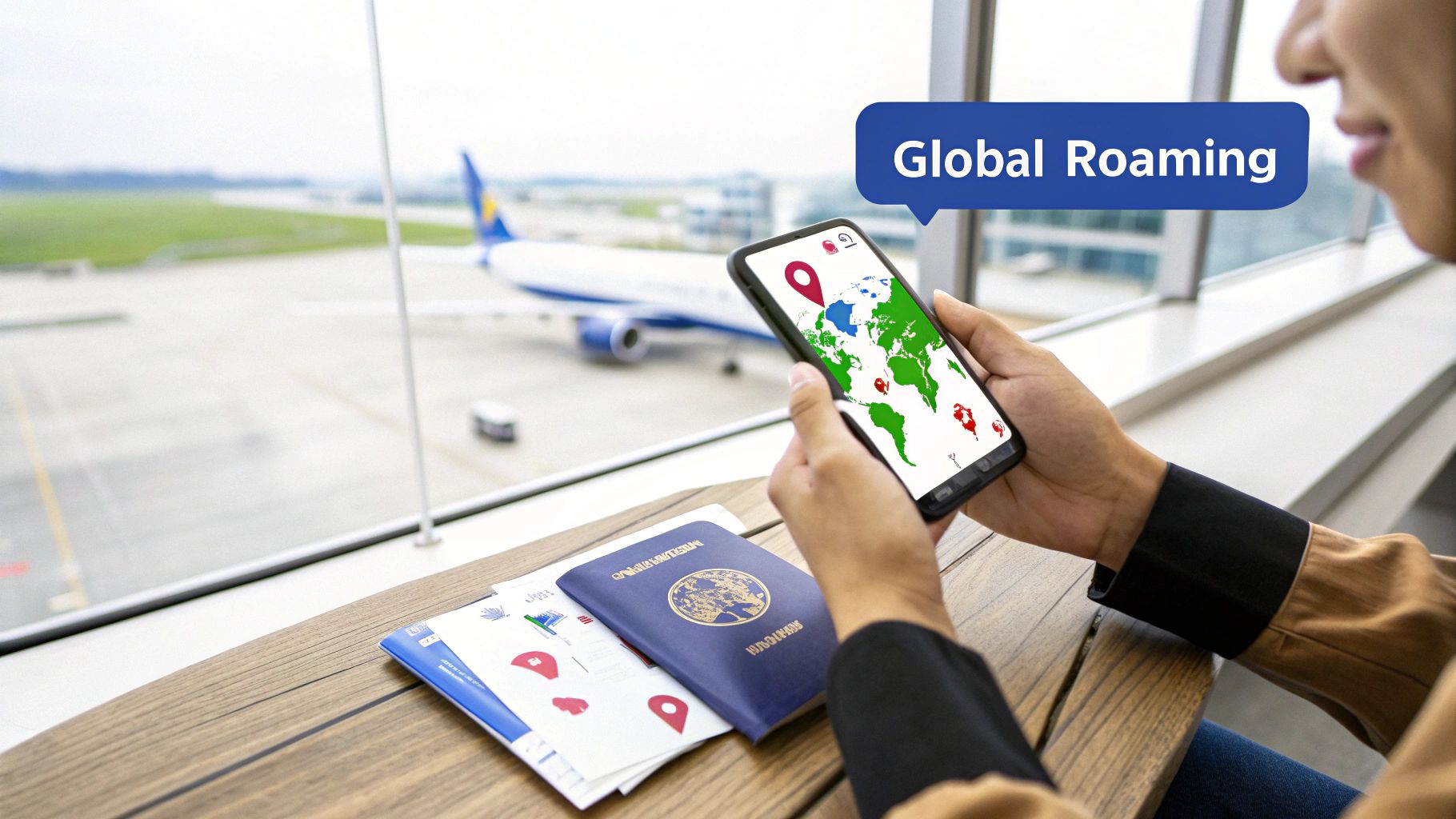
Think of your home mobile network as your local supermarket. You shop there every day. When you travel, you suddenly need to pop into a supermarket in a different country. International roaming is like a special arrangement that lets you use your usual loyalty card in that foreign store.
When you arrive, your phone automatically latches onto a local partner network. That network then has a quick “chat” with your home provider to confirm you’re a paying customer. This digital handshake keeps you online, but there’s a catch—you’re essentially paying a premium for the convenience of using someone else’s network.
That convenience fee is precisely where the trouble starts. Roaming charges can spiral out of control, either through steep daily access fees or shockingly high per-megabyte rates. Since Brexit, many UK travellers have been hit with the return of hefty roaming charges in Europe, a region that used to be a safe zone for mobile data.
Understanding your options before you go is the key to avoiding a nasty surprise on your next bill. Thankfully, you’re no longer stuck with just your provider’s standard roaming plan. You can:
A little bit of planning goes a long way. By choosing the right connectivity option for your trip, you can make sure your money is spent on making memories, not on outrageous data fees. With a travel eSIM from TapSim, you can have affordable data sorted before your plane even touches down, completely avoiding the roaming trap.
Ever wondered how your phone just knows how to connect to a network as soon as you land in a foreign country? It might seem like magic, but it’s all down to a clever system of partnerships.
Think of your home mobile provider as your local club. When you travel, that club has pre-arranged agreements with other clubs around the world, allowing you, as a member, to use their facilities. International SIM card roaming is exactly that – a commercial agreement between mobile operators.
Your phone sends out a signal, a local network in the country you’re visiting picks it up, and then contacts your home provider to check you’re a legitimate customer. This quick digital handshake gets you connected, letting you make calls, send texts, and browse the web. Understanding this is the first step to figuring out why roaming can get so eye-wateringly expensive; you’re essentially paying for a temporary membership, and there’s often a hefty surcharge for the convenience.
Let’s break down what’s happening behind the scenes. The moment you switch off airplane mode, your phone starts hunting for a mobile signal. It quickly realizes your home network is nowhere to be found and starts looking for other networks that your provider has a roaming agreement with.
Once it locks onto a partner network, a rapid-fire conversation begins:
This entire back-and-forth happens in a matter of seconds, giving you that seamless connection you expect. The catch, of course, is that complex billing process, which is how so many travelers end up with shockingly high phone bills.
The type of mobile technology your phone uses also makes a difference. Most of the world runs on the GSM (Global System for Mobiles) standard, which simplifies roaming between many countries. However, you can still run into compatibility problems, especially if you’re using an older phone or traveling to less common destinations.
This is where modern alternatives like eSIMs completely change the game. Rather than “borrowing” access from a local network through an expensive roaming agreement, an eSIM lets your phone connect directly to a local provider, almost as if you’d popped a local SIM card into it.
With a travel eSIM, you’re no longer a visitor paying premium roaming rates. You’re connecting like a local, which is why the data is often significantly more affordable and transparent.
This puts the control squarely back in your hands, allowing you to pick a data plan that actually suits your trip and your budget. With TapSim, travelers can get affordable data sorted in minutes, completely side-stepping the complicated and costly world of traditional roaming. You just land, activate your eSIM profile, and you’re online instantly.
We’ve all heard the horror stories. You get back from a fantastic trip, still basking in the travel glow, only to open a mobile phone bill that’s more expensive than your plane tickets. It’s the classic post-travel bill shock, and it happens because the true cost of using your home provider’s international SIM card roaming is often buried in a maze of confusing terms and sneaky fees.
Mobile networks often try to simplify things with daily roaming passes. A £2 or £3 daily fee sounds harmless enough, doesn’t it? But for a two-week holiday, that’s suddenly an extra £28 to £42 just to use the data you’re already paying for back home. You end up paying a hefty premium for what feels like a simple convenience.
Beyond those daily passes, the real financial danger is lurking in the fine print. Some plans hit you with eye-watering rates for every single megabyte of data you use. Just a few minutes of scrolling social media or using Google Maps could rack up tens of pounds before you even notice.
Another trap to watch out for is the “fair usage policy.” This is a sneaky cap on how much high-speed data you can actually use while roaming, even if you’re on an “unlimited” plan. Once you hit that limit—sometimes as low as 5GB—your internet speed is throttled to a crawl, making it practically useless for anything more than sending a basic text. It’s the last thing you want when you’re relying on your phone for navigation or booking a ride.
Post-vacation bill shock isn’t bad luck; it’s often by design. Understanding the common traps—from daily fees to data caps—is the first step to avoiding them and keeping your travel budget for what really matters.
If you’re traveling from the UK, things have gotten a lot more complicated. Since Brexit, the safety net of free EU roaming has vanished for most people. The major UK networks have brought back the very daily roaming charges in Europe we thought were a thing of the past.
For instance, Three UK now charges £2 per day to roam in Europe. Vodafone isn’t far behind at £2.25 per day for 48 EU destinations, and EE will ask for £2.29 daily. These might seem like small amounts, but it’s a big step backward, with some reports suggesting roaming fees are already 20-40% higher than they were. And if you’re heading further afield to places like the USA or Caribbean, those costs can skyrocket to nearly £7 a day.
These revived charges have turned what should be a simple trip across the Channel into a potential financial headache. It’s no wonder so many travelers are now looking for smarter, more transparent ways to stay connected than traditional international SIM card roaming. To get a deeper understanding of how these costs accumulate, check out our detailed guide on what roaming charges are and how to avoid them. An eSIM from TapSim gives you a clear, upfront price, so you can buy exactly the data you need without any risk of a nasty surprise when you get home.
Planning a trip involves a lot of moving parts, and figuring out your phone situation is a big one. Today, you’ve got more choices than ever when it comes to international SIM card roaming, each with its own pros and cons. Let’s walk through the main ways you can stay connected overseas without getting stung by surprise charges.
At a high level, you have three choices. You can stick with your home provider and pay for a roaming plan, which is easy but often expensive. You could also grab a local physical SIM card when you land, which is usually cheaper but can be a real hassle. Or, you can go with a modern travel eSIM.
Using your regular mobile provider’s roaming package is certainly the simplest option. You step off the plane, switch off airplane mode, and your phone just works. There’s no need to fiddle with tiny SIM cards or juggle new phone numbers.
But that convenience usually comes with a hefty price tag. You’re often looking at a steep daily fee just to use your phone like you would at home. For many travelers, these costs add up shockingly fast, making that week away a lot more expensive than planned.
This simple flowchart shows the reality for UK travelers once they leave the country.
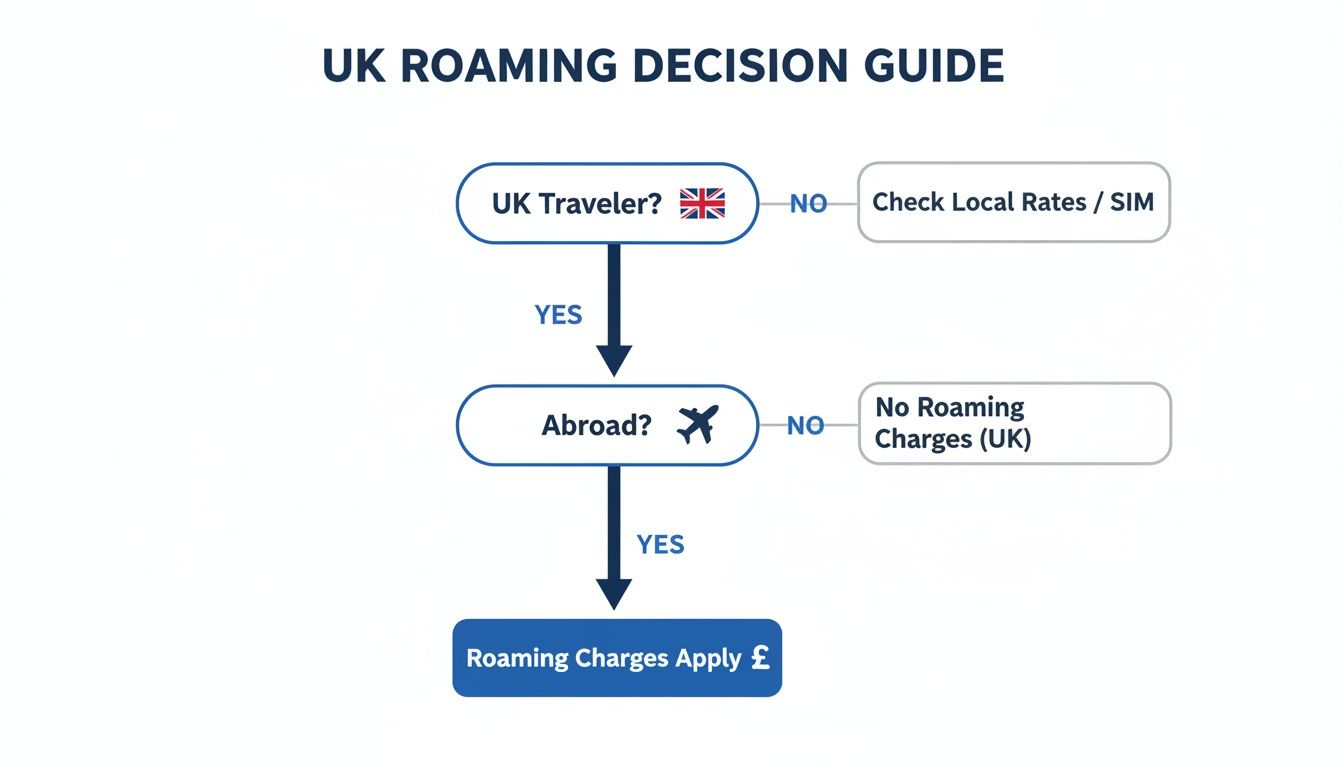
As you can see, the moment you travel outside the UK, roaming charges kick in, becoming an immediate and often unavoidable cost with traditional plans.
For years, the savvy traveler’s trick was to buy a local SIM card upon arrival. This approach plugs you directly into local networks, giving you access to much cheaper rates for data, calls, and texts than you’d ever get by roaming.
The trade-off is the hassle. You often have to spend the first hour of your holiday in a queue at an airport kiosk, trying to navigate language barriers and unfamiliar registration rules. It also means swapping out your home SIM, which is a pain if you’re expecting important calls or two-factor authentication texts on your normal number.
This brings us to the most flexible and increasingly popular option: the travel eSIM. An eSIM (or embedded SIM) is a digital SIM you can download and install directly onto your phone. No physical card needed. It really offers the best of both worlds.
With a travel eSIM, you get the low-cost benefits of local data rates combined with the sheer convenience of sorting it all out before you’ve even packed your bags.
To figure out what’s right for you, it’s a good idea to compare VoIP, eSIMs, and carrier plans based on your specific trip. For most people with a modern smartphone, though, the seamless experience of an eSIM is tough to beat. With TapSim, you can land, activate your plan, and be online in a matter of minutes.
Let’s talk about the future of staying connected abroad: the eSIM. Think of an eSIM as a digital SIM card that’s already built into your phone. It’s a complete game-changer for international travelers, doing away with the need to fiddle with tiny plastic SIM cards. Instead, you can download and activate a mobile data plan directly on your device.
Picture this: you’ve just landed in a new country, and you’re online in minutes. There’s no frantic search for a local SIM shop, no wrestling with language barriers at a mobile kiosk, and absolutely no nasty surprise roaming bill waiting for you back home. That’s the kind of freedom an eSIM offers.
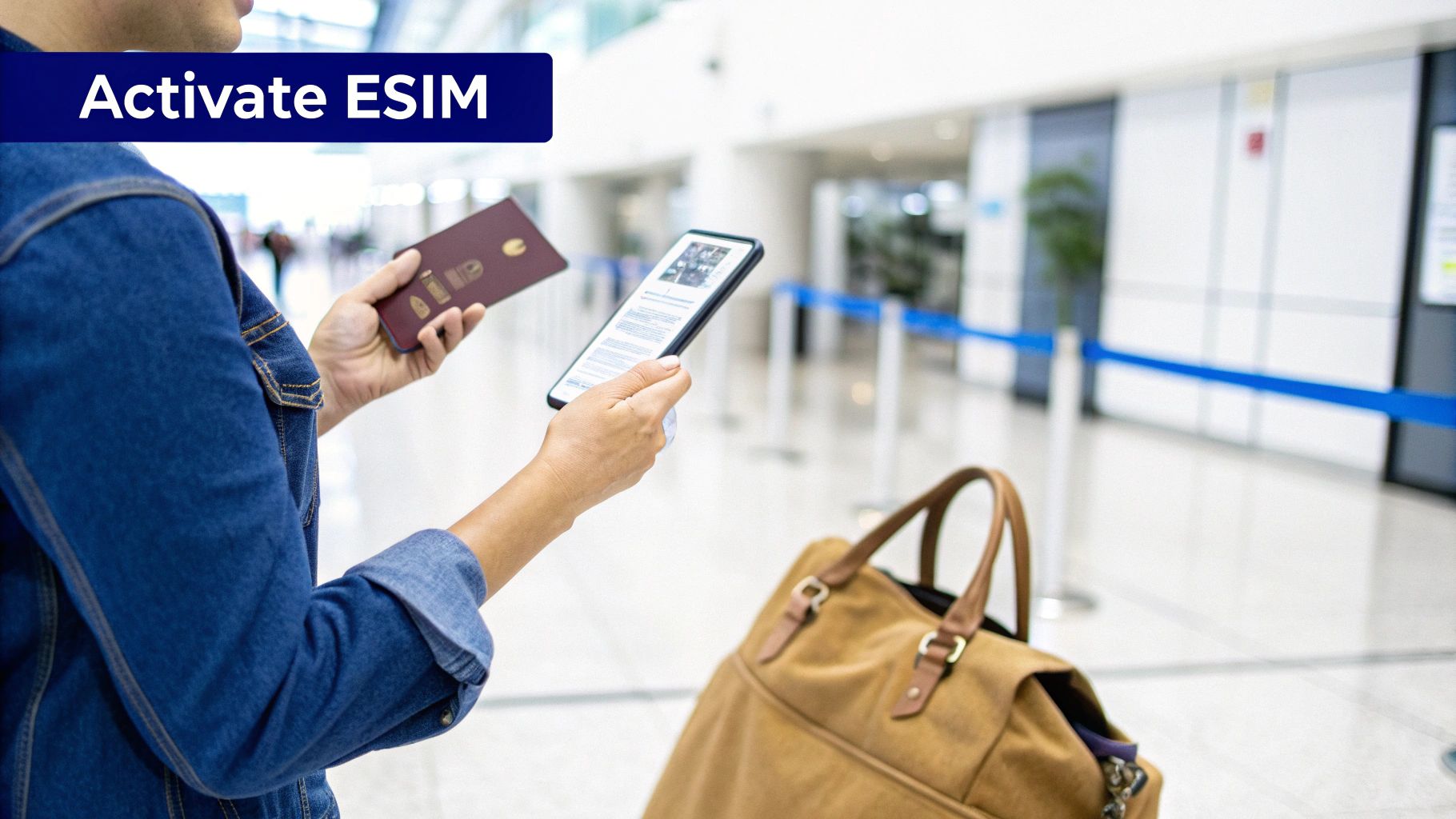
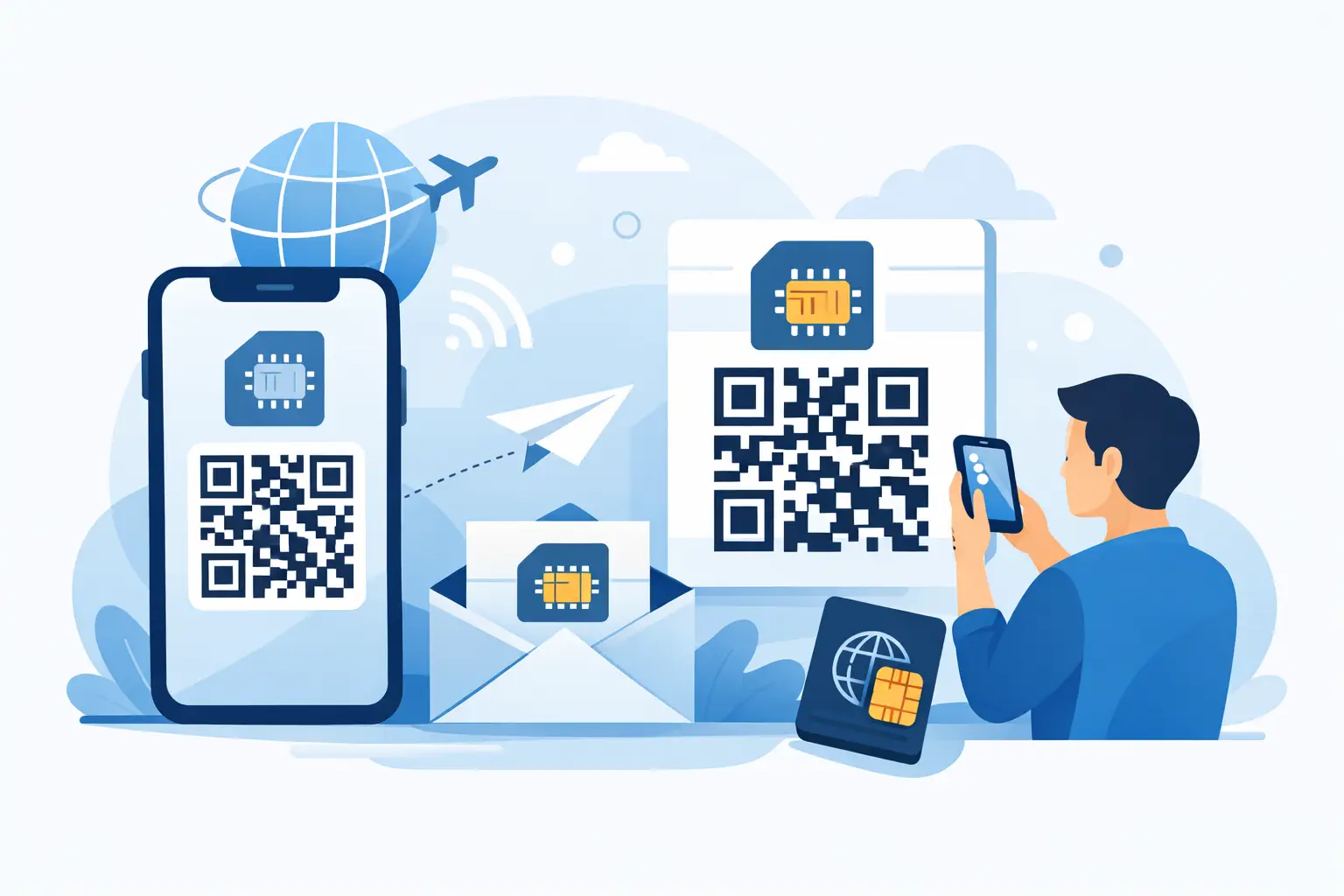
The real magic of an eSIM is just how simple and efficient it is. Rather than ejecting your tiny home SIM card—and running the very real risk of losing it—you just scan a QR code or tap a few buttons in an app to install a new data profile. It’s that easy.
This digital-first approach brings some major advantages for anyone heading overseas:
An eSIM puts you back in control. You pick the data you need, pay a clear, upfront price, and stay connected entirely on your own terms.
The global data roaming market is on track to grow from $89.43 billion in 2024 to $95.43 billion in 2025, fueled by a massive comeback in tourism and business travel. At the same time, travelers are getting much savvier with their connectivity, with many saving up to 70% on data simply by choosing eSIMs over traditional roaming. You can dig deeper into the global data roaming market trends for more details.
If you’d like a straightforward explanation of the tech itself, our guide on how an eSIM works breaks everything down step-by-step. With TapSim, the whole process is designed to be fair, fast, and honest. That way, you can focus on enjoying your trip, not worrying about your phone bill.
A bit of planning before you fly can save you a world of hassle and a hefty bill when you land. Running through a quick checklist means your phone will be ready to go, leaving you free to enjoy the trip rather than hunting for a connection.
Think of it as a pre-flight check for your digital life. A few simple steps are all it takes to guarantee you have reliable, affordable data the moment you touch down.
The best time to sort out your travel data is when you’re comfortable at home with a solid Wi-Fi signal. Don’t put it off until you’re rushing to the airport gate or, even worse, after you’ve already landed.
Pro Tip: Don’t activate your eSIM data plan until you’re actually at your destination. This way, the clock on your plan’s validity only starts when you need it, which means you get every last drop of value out of it.
Once the wheels are down and you’re off the plane, getting online is straightforward if you’ve done your prep.
We hear a lot of the same questions from travelers figuring out the best way to stay connected abroad. Here are a few of the most common ones.
Absolutely. In fact, this is one of the best things about using an eSIM. Most newer phones that support eSIMs are also “Dual SIM” phones.
This lets you keep your main physical SIM card active – perfect for receiving important calls or texts from home – while using your travel eSIM for affordable data. It’s the best of both worlds, really.
Don’t worry, you won’t be left stranded. Running out of data is a simple fix. With TapSim, you can just top up your data plan right from the app or website whenever you get low.
You don’t need to buy a whole new plan; you just add more data to your existing one. It ensures you’re never caught offline when you need it most.
There’s a good chance it will. Most smartphones released in the past few years, like recent iPhones, Samsung Galaxy models, and Google Pixels, are eSIM-ready.
The quickest way to check is to look in your phone’s settings under ‘Cellular’ or ‘Mobile Data’. If you’re still not sure, just check the up-to-date compatibility list on your eSIM provider’s website.
Ready to travel smarter and ditch those expensive roaming fees for good? With TapSim, you can get connected in over 150 destinations with a data plan that’s fair, fast, and honest.