Travel eSIM No Hidden Fees: What to Check
Choose a travel eSIM no hidden fees plan with confidence. Learn what providers hide, what to check, and how to avoid roaming bill shock abroad.
A pay-as-you-go eSIM is a flexible way to get mobile data for your travels without being tied down by contracts or stung by surprise fees. Think of it like a digital, reloadable travel card for data. You add what you think you’ll need, use it, and only top up if you have to. It puts you firmly in control of your travel spending.
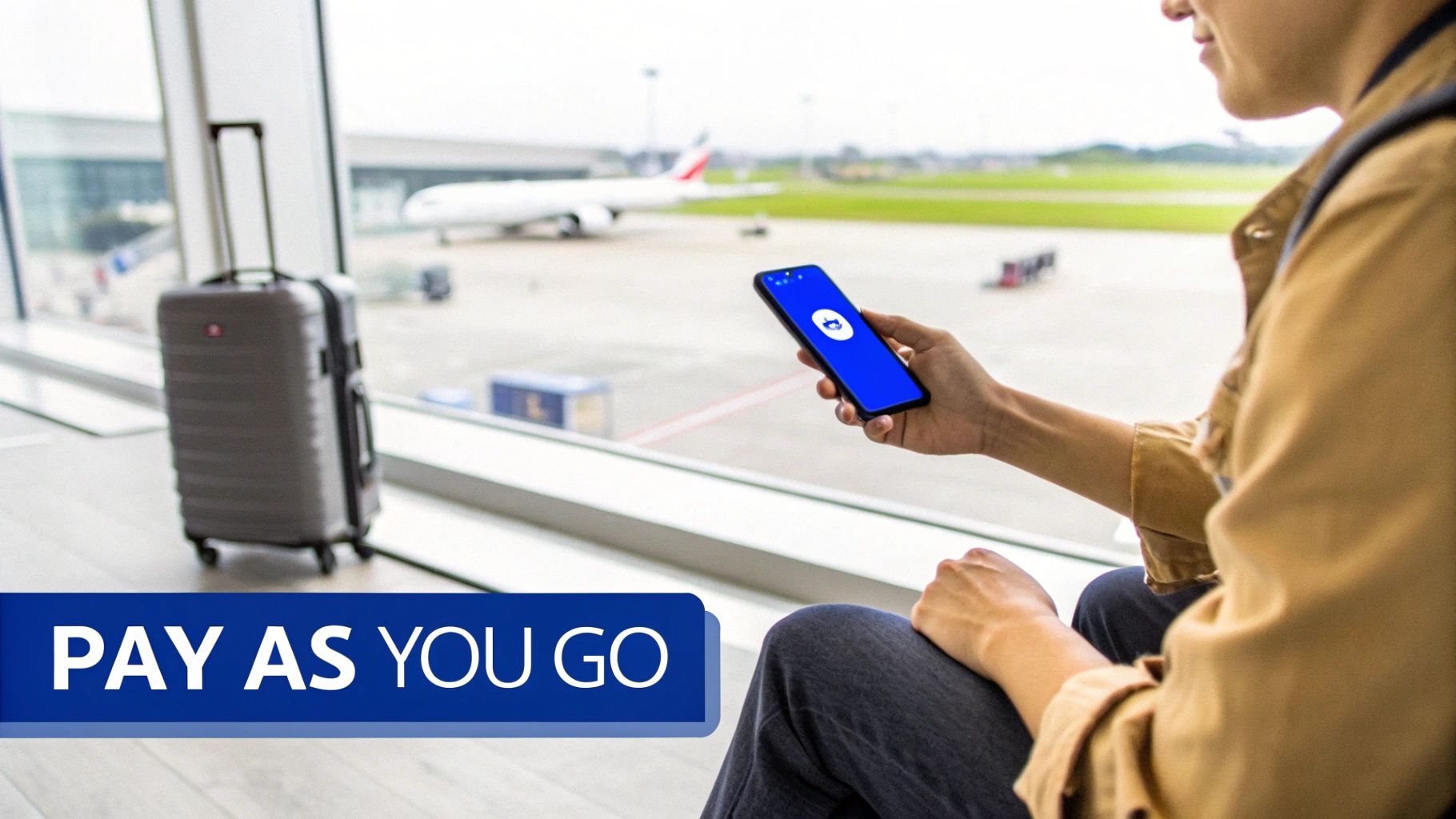
Not long ago, staying connected abroad meant choosing between two bad options. You either accepted the shocking daily roaming charges from your home provider or wasted precious travel time hunting for a physical SIM card at the airport. An eSIM pay as you go plan changes everything, offering a modern, digital solution built for today’s traveler.
Unlike the little plastic chip you’re used to, an eSIM (or embedded SIM) is already built into your phone. This clever technology lets you download and activate a data plan from almost anywhere, often in just a few minutes. The “pay as you go” part is what makes it a traveler’s best friend—you’re not locked into a monthly contract or a rigid plan that doesn’t fit your trip.
This approach offers a refreshingly straightforward and transparent way to manage mobile data when you’re away. Gone is the fear of coming home to a massive bill packed with confusing roaming fees. You simply pay upfront for a set amount of data, and that’s it.
Here’s why it’s a game-changer for travelers:
This whole model is built on fairness and transparency. You only ever pay for the data you intend to use, which is why it’s perfect for everyone from full-time digital nomads to casual vacationers. It’s all about making travel connectivity simple, honest, and completely stress-free.
You might be surprised at just how straightforward getting connected with a pay-as-you-go eSIM is. Forget fiddling with tiny plastic SIM cards or hunting for a mobile phone shop as soon as you land. This is a fully digital setup you can handle from your living room before your bags are even packed.
The whole process is designed for convenience. It starts with a quick check to see if your phone is eSIM-ready—most modern smartphones are, but it never hurts to be sure. After that, you just pick a data bundle that suits your travels, whether you’re off for a weekend city break or a month-long backpacking trip.
Once you’ve chosen your plan, getting set up is incredibly fast. Here’s how it usually works:
Your data usage is then deducted from the bundle you paid for upfront. There are no contracts to sign and no surprise debits from your bank account, which puts you firmly in control of what you spend.
The real beauty of this system is its predictability. You know exactly how much data you have and how much you’ve spent, completely removing the risk of unexpected roaming bills when you get home.
So, what happens if you burn through your data allowance while binge-watching a series on a long train journey? A flexible esim pay as you go plan means you won’t be left disconnected. With user-friendly providers like TapSim, adding more data is just a few clicks away.
The top-up process is just as simple as the initial purchase. You just buy another data package through the website, and it activates on your existing eSIM almost instantly. This kind of flexibility is a huge part of why so many travelers are making the switch.
In fact, the number of global eSIM connections is expected to soar, with industry experts at Juniper Research projecting massive growth as travelers discover they can significantly cut data costs compared to traditional roaming fees.
For a long time, connecting your phone abroad involved a frustrating choice: either rack up eye-watering roaming charges or waste precious travel time hunting down a local SIM card. Thankfully, the pay-as-you-go eSIM has completely changed the game, giving modern travelers a solution that’s both affordable and incredibly convenient.
The biggest win here is total cost control. With a prepaid eSIM, you buy a set amount of data upfront. That’s it. There are no hidden fees or nasty surprise bills waiting for you back home. If you use up your data, it simply pauses until you choose to add more. This straightforward approach takes the financial guesswork out of staying connected on your travels.
Beyond the cost savings, the sheer flexibility is a massive plus. An eSIM lets you pick a plan that fits your trip perfectly. Grabbing a small data bundle for a weekend city break in Rome? Easy. Need a larger package for a month-long backpacking adventure across Southeast Asia? No problem. You’re never tied into a long-term contract.
This freedom is paired with unparalleled convenience. The whole experience, from buying your plan to getting it running on your phone, is digital and takes just a few minutes. You can get everything sorted from your sofa before you even head to the airport, meaning you’re connected the second your plane touches down.
Getting online with an eSIM is a simple, three-step process.
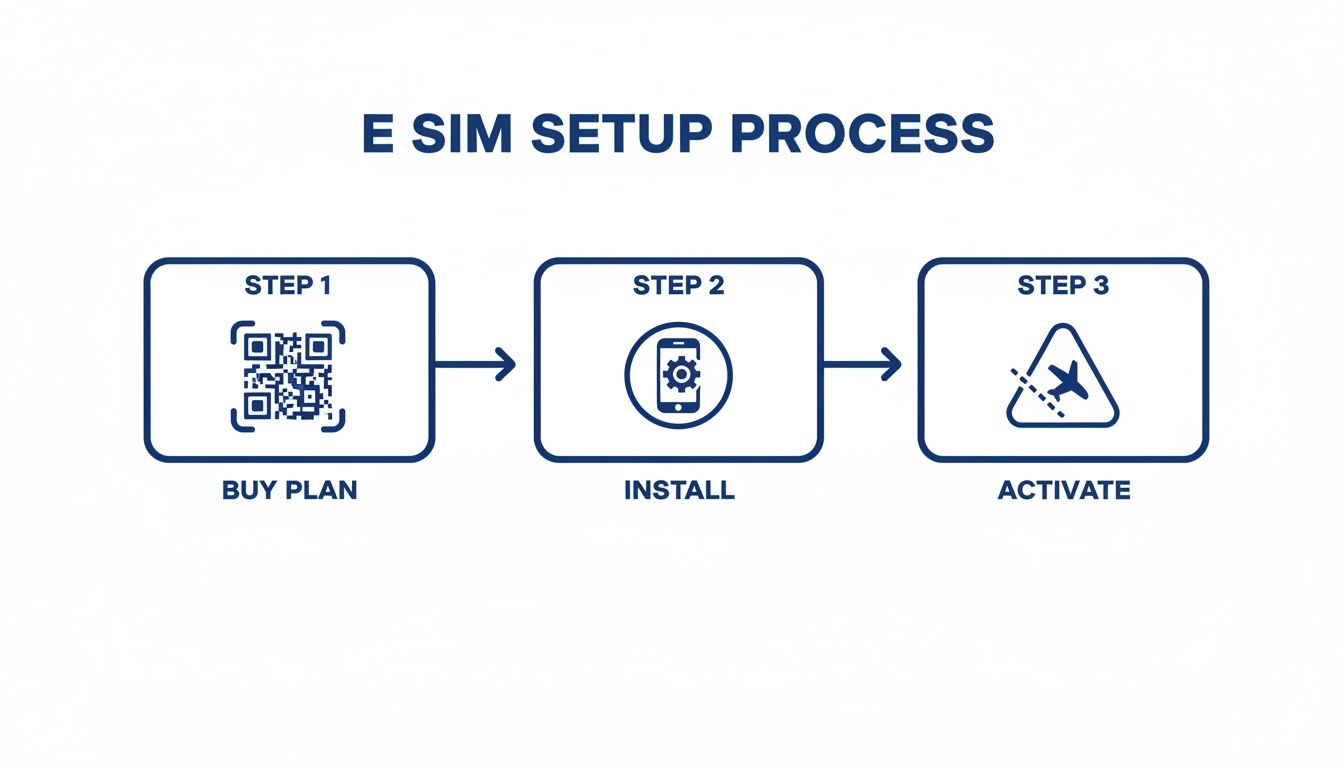
As you can see, the setup is entirely digital. No more queuing at airport kiosks or fumbling with tiny plastic cards.
One of the most practical benefits is the ability to use two mobile plans at once. Your new travel eSIM works right alongside your regular SIM card. This means you can keep your primary phone number active for calls, texts, and those all-important two-factor authentication codes, while routing all your mobile data through the much cheaper travel eSIM.
This dual-SIM capability is a major reason why eSIM technology is becoming so popular with travelers who want to cut their data spending dramatically. It’s no secret that traditional roaming can eat into a travel budget. In contrast, a pay-as-you-go eSIM from a provider like TapSim offers a fair and simple alternative for staying connected worldwide.
While pay-as-you-go eSIMs are mainly about data, you’ll still want to make calls. You can easily use your eSIM data to power some of the best international calling apps, giving you an affordable way to stay in touch with everyone back home.
Picking the perfect eSIM pay as you go plan shouldn’t feel like a chore. Forget endless scrolling through confusing options. All you really need to consider are three things: where you’re going, how long you’ll be there, and how much data you genuinely think you’ll use.
Start by thinking about how you travel. Are you the type to just use data for a quick map check and messaging, or are you a remote worker who’ll be joining video calls? Your needs will change dramatically based on your style.
The easiest way to get a starting point is to check your phone’s settings and see what your current mobile data usage looks like. This gives you a solid baseline of your normal habits. After that, just adjust it based on what you’ll be doing on your trip.
A helpful tip: always lean towards overestimating slightly. It’s far better than getting caught out and having to top up unexpectedly. And if you’re hopping between countries in Europe or Asia, a regional plan is almost always more wallet-friendly than buying a separate plan for every single stop.
To make this even easier, here’s a quick guide to help you figure out where you fit.
This table gives you a rough idea of what kind of data package to look for based on common traveler profiles.
| Traveler Profile | Typical Daily Usage | Recommended Data Plan |
|---|---|---|
| The Weekend Explorer | Light mapping, messaging, occasional social media checks. Mostly uses Wi‑Fi. | 1GB to 3GB for a 3-5 day trip. |
| The Social Storyteller | Regular photo/video uploads, music streaming, active on social apps. | 5GB to 10GB for a 7-10 day trip. |
| The Remote Worker | Video calls, file sharing, hotspotting for a laptop, constant connectivity. | 20GB or more, depending on trip length. |
| The Family Adventurer | Sharing a hotspot between multiple devices for kids’ entertainment and navigation. | 30GB+ for a week-long family holiday. |
Ultimately, your own usage habits are the best guide, but these profiles cover most scenarios you’re likely to encounter on the road.
Once you’ve got a handle on your data needs, it’s time to look at the plan details. You want to find a provider that’s upfront about everything, with no hidden surprises.
The best eSIM plans are the ones with no hidden catches. Always double-check the validity period, hotspot capability, and any fair usage policies so you know exactly what you’re getting from day one.
For example, with TapSim, every plan page clearly shows its duration and tells you whether you can share your data via a personal hotspot. It’s also worth remembering there are various types of eSIM plans every international traveller should know about, which can help you make a better choice.
Making sure the validity period covers your entire stay is a big one—a 7-day plan is no use for a 10-day holiday! By matching these simple details to your itinerary, you can relax and enjoy your trip, knowing your connection is completely sorted.
Ready to try it out? Getting your first eSIM set up is surprisingly straightforward. You can handle the entire process from your sofa before you even pack your bags.
This guide will walk you through the four main steps, taking you from purchase to getting online the moment you land. No more airport Wi-Fi hunts or queuing for a local SIM card.
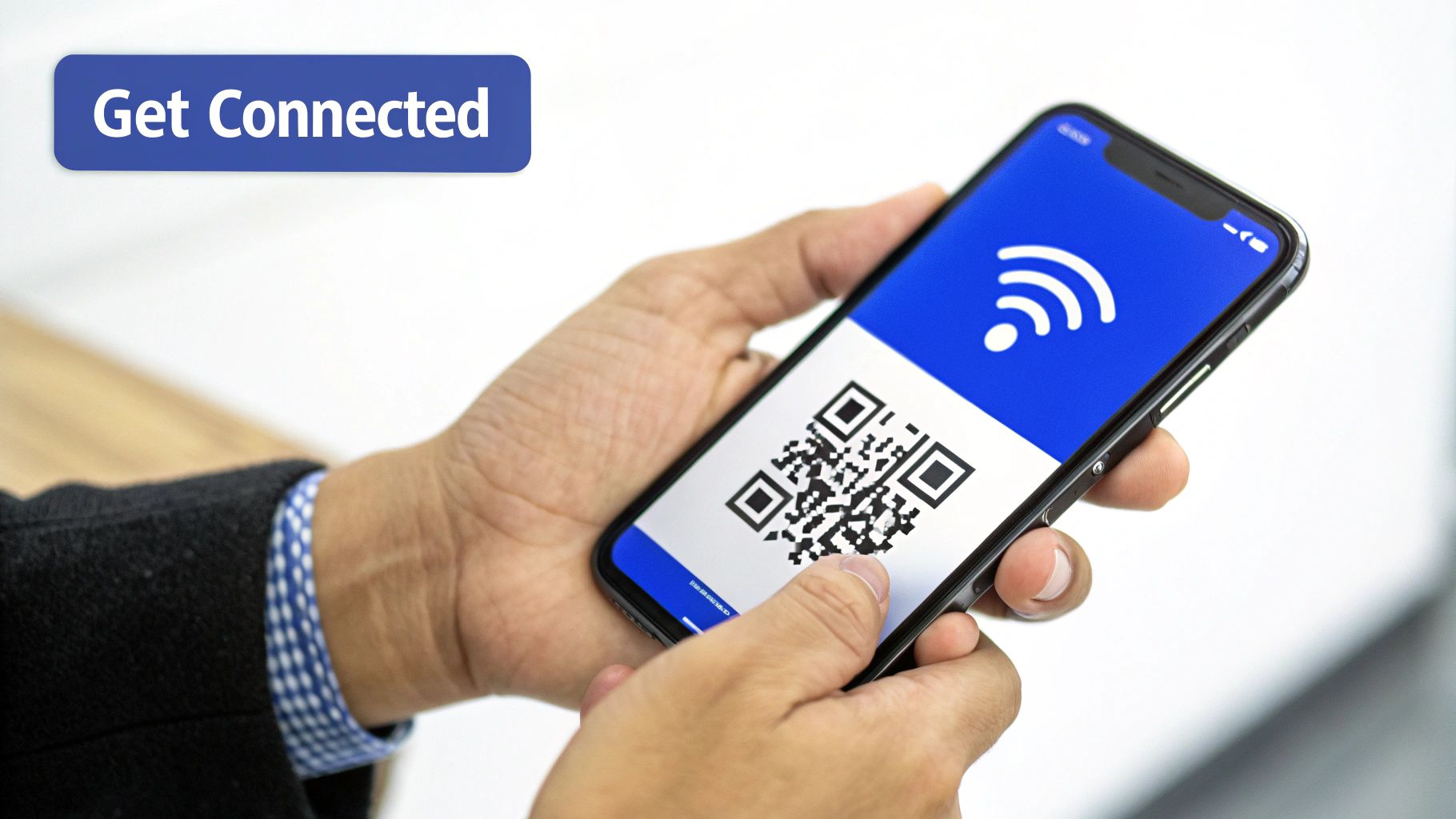
The whole journey is designed to be quick and easy, broken down into a few simple stages. Let’s get you ready for a stress-free travel experience.
First things first: is your phone eSIM-ready? Most smartphones released in the last few years already have the technology built in, which is great news.
An easy way to find out is to dive into your phone’s settings. Look for ‘Mobile Data’ or ‘Cellular’, and if you see an option like “Add eSIM” or “Add Mobile Plan,” you’re all set. For total peace of mind, most eSIM providers, including TapSim, have a compatibility checker right on their website.
Now for the fun part – picking a data plan that fits your trip. Think about where you’re going and for how long. The beauty of an eSIM pay as you go plan is that you only buy what you need. A small 1GB package for a weekend in Paris? Perfect. A larger 10GB regional plan for a two-week tour of Southeast Asia? No problem.
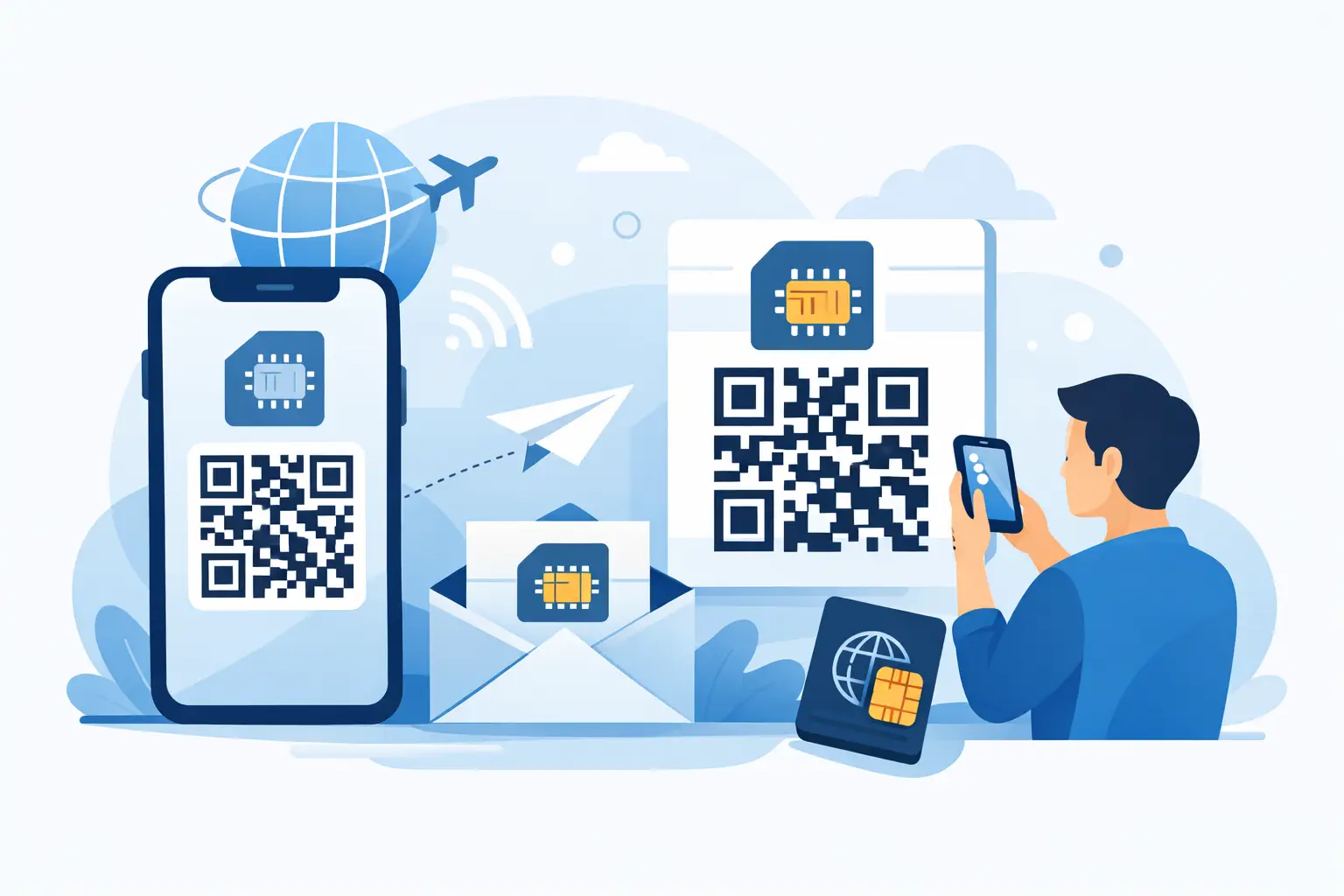
Just head over to an eSIM website like TapSim and browse the plans for your destination. Once you’ve made your pick, a QR code will land in your email inbox almost instantly. Think of this code as your new digital SIM card.
This is the key to a seamless arrival. It’s best to do this step while you’re still at home and connected to your stable Wi-Fi.
Simply open your phone’s camera and scan the QR code from your email. Your device will then walk you through a couple of quick prompts to install the eSIM profile. If you need a bit more guidance, there are helpful walkthroughs available, like this one on how to activate an eSIM on iPhone.
Don’t worry, the plan won’t actually start until you land. It just sits quietly on your phone, ready for action.
The moment your plane touches down, you’re just a couple of taps away from being connected.
Go back into your phone’s mobile data settings, choose your new eSIM as the line for mobile data, and make sure “Data Roaming” is switched on for that specific eSIM. Within a few moments, your phone will connect to the local network, and just like that, you’re online.
While eSIMs are a fantastic choice for most modern travelers, it’s always smart to be aware of other mobile connectivity options for international living to see what works best for your situation. That said, the sheer simplicity and speed of eSIM activation make it a clear winner.
One of the best things about a pay-as-you-go eSIM is the total control it gives you. Forget about bill shock or suddenly running out of data; keeping tabs on your usage is straightforward and transparent, putting you in the driver’s seat of your travel connection.
Most of this happens right on your phone. You can easily see how much data you’ve used by checking your device’s mobile or cellular settings. This built-in tracker gives you a real-time look, so you always know where you stand.
When your data starts to get low, your eSIM provider should send you a notification. This heads-up gives you plenty of time to decide what to do next. Maybe you just need a tiny bit more data to order a taxi to the airport, or perhaps you’ve got another week of your trip left and want to add a bigger chunk of data. The choice is yours.
Topping up is designed to be just as easy as the initial setup. There’s no need to hunt down a local shop or navigate a language barrier. The whole thing is done online in just a few clicks.
The real beauty of a pay-as-you-go eSIM is adding more data whenever and wherever you need it. A few taps on a website, and you’re back online instantly, keeping your travels smooth and uninterrupted.
With TapSim, for instance, you can grab an eSIM top up right from the website, so you can stay connected without any fuss.
Even with easy top-ups, it’s always smart to make your data allowance stretch. A few simple habits can make a big difference:
This kind of flexibility means you can adapt to any changes in your plans without ever stressing about losing your connection or getting hit with surprise charges.
It’s completely normal to have a few questions before diving into something new, especially when it comes to staying connected abroad. We get it. Let’s walk through some of the most common queries we hear from travelers just like you.
Yes, you absolutely can. Think of a data-only eSIM pay as you go plan from TapSim as a travel companion for your main SIM card.
Your primary number stays active for all the important stuff – phone calls, texts from home, and those crucial verification codes from your bank. Meanwhile, the travel eSIM handles all your mobile data, saving you from high roaming costs. Your apps like WhatsApp and iMessage won’t even notice the difference and will keep working with your usual number.
Don’t panic – this is where the “pay as you go” model really shines. If your data runs out, your internet connection simply pauses. That’s it.
You will not be charged any surprise overage fees. There’s no risk of coming home to a massive bill. With a provider like TapSim, you can just hop onto their website and grab a quick top-up or a new data package. You’ll be back online in minutes, no strings attached.
You are always in control of what you spend. The connection stops until you decide to add more data, which is a huge weight off your mind when you’re supposed to be relaxing.
They do. Each plan has a set validity period, typically for 7, 15, or 30 days.
The clock on this validity period only starts ticking when you activate the eSIM at your destination, not when you buy it. So, you can buy your plan well in advance. Just make sure its duration matches the length of your trip. If your travels last longer than expected, you can simply purchase a new plan.
In most cases, yes! This feature is often called a “personal hotspot” or “tethering,” and it’s a lifesaver for many travelers.
Many travel eSIMs, including most plans from TapSim, allow you to share your phone’s data connection with a laptop, tablet, or even your travel buddy’s phone. It’s incredibly handy for getting some work done or keeping everyone connected without buying multiple plans. It’s always a good idea to double-check the plan details before you buy, just to be sure hotspot functionality is included.
Ready to travel without worrying about connectivity? TapSim offers fair, fast, and honest eSIMs for over 150 destinations.