eSIM for Business Travel: What to Know
Learn how esim for business travel cuts roaming costs, speeds arrival setup, and keeps teams connected with clear data limits and fewer surprises.
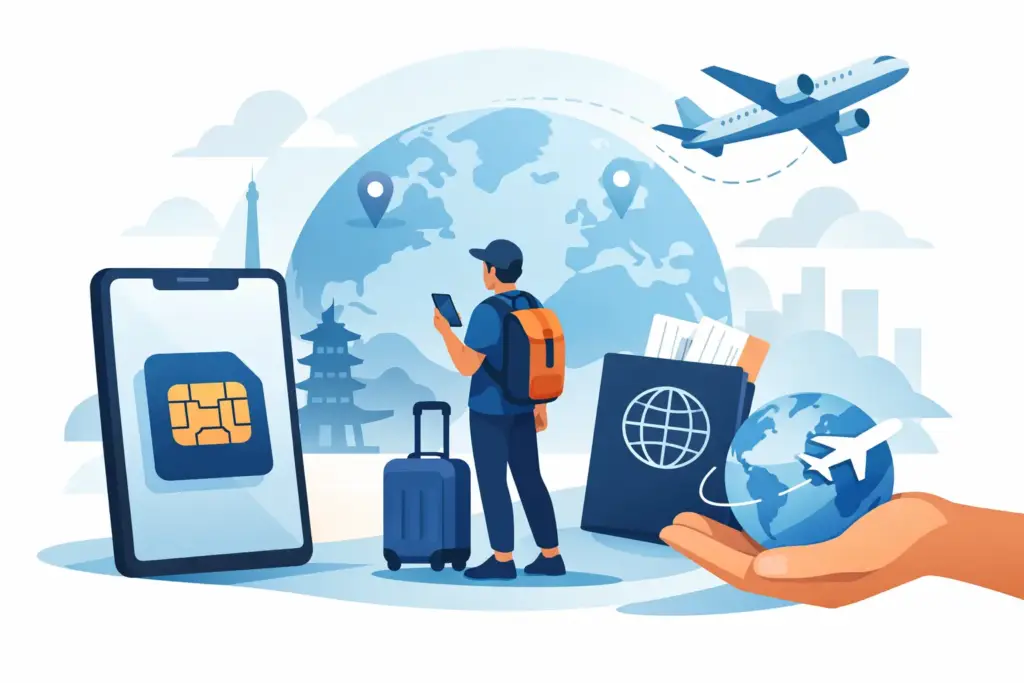
Airport Wi-Fi is always worst when you actually need it. You land, the gate changes, your ride messages you, and suddenly you are hunting for a signal with 3% battery and no map. That is exactly why so many travelers now buy eSIM for international travel before they leave home instead of gambling on roaming or a local SIM counter.
That move makes sense, but only if you know what you are buying. Not all travel eSIMs are as clear as they look on the checkout page. Some advertise unlimited data that slows to a crawl after a small amount of use. Some work in one country but not the next stop on your trip. Some make hotspot access hard to find until after you pay.
The good news is simple: buying the right eSIM is not complicated. You just need to check the details that actually affect your trip.
The biggest advantage is timing. If you install your eSIM before you fly, your phone is ready when you land. No searching for a kiosk, no swapping tiny plastic cards, no trying to translate mobile plans after a long flight.
There is also a cost angle. Home carrier roaming can be convenient, but it is often expensive and vague. You may get a daily pass, but that does not always mean generous high-speed data. A prepaid travel eSIM gives you a fixed plan upfront, which makes spending easier to control.
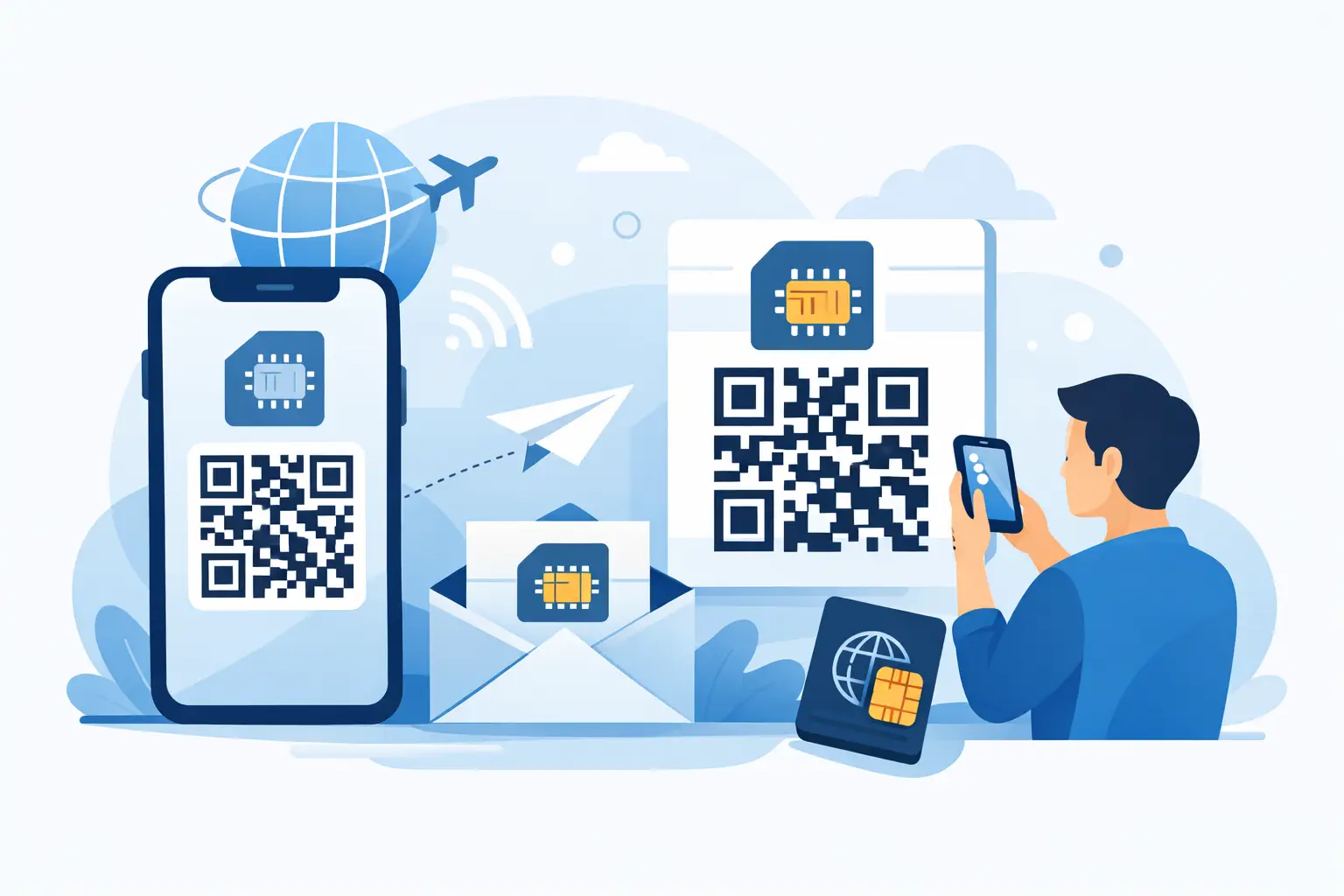
Just as important, setup is usually faster than people expect. In most cases, you buy online, receive a QR code, install the eSIM in minutes, and activate the service when you arrive. For travelers who want a backup before touching down, that matters.
Price matters, but it is rarely the whole story. A cheaper plan is not a better plan if it leaves you stuck with unusable speeds or hidden restrictions on day two.
Start with geography. If you are visiting one country, a single-country plan may be the best value. If you are moving across Europe or hopping around Southeast Asia, a regional plan can save you from buying multiple packages.
This sounds obvious, but travelers often miss the edges of a trip. Maybe you have a layover in another country. Maybe your cruise stops in a second port. Maybe your business trip turns into two days in a neighboring market. Coverage gaps are annoying when they happen in places where you need directions, banking access, or ride-share apps.
Be careful with the word unlimited. In travel data, it often means there is a fair-use threshold after which speeds are reduced. That is not automatically bad. Some travelers mainly use messaging, maps, and email, so a lower-speed period may be fine.
The problem is when the limit is buried or unclear. If you plan to tether your laptop, take video calls, upload content, or stream often, you need to know exactly how much high-speed data is included and what happens after that.
Honest providers publish the cap, the fair-use policy, and any speed restrictions clearly. That is a better sign than a huge unlimited banner with fine print hiding somewhere else.
If you are a remote worker, hotspot access is not optional. It is part of the plan. The same goes for families who want to connect a tablet or share data with another device.
Some eSIM plans allow hotspot use with no fuss. Others block it or restrict it heavily. If you rely on your phone as a backup connection, check this before checkout, not after you are already in a hotel trying to join a meeting.
A good eSIM buying experience feels simple. You receive clear setup steps, you know whether the plan starts on installation or arrival, and you can tell which line in your phone settings is your travel data line.
Confusion usually comes from weak instructions, not from the technology itself. If the provider explains compatibility, installation, activation timing, and APN settings clearly, that removes most of the friction.
Think of the process as four quick checks.
First, confirm your phone supports eSIM and is carrier unlocked. A compatible phone is essential, and an unlocked device is just as important. A locked phone may support eSIM in theory but still refuse a plan from another provider.
Second, estimate your data use honestly. Light travelers who use maps, messaging, and occasional browsing can get by on far less than digital nomads taking Zoom calls and uploading files. Overbuying wastes money. Underbuying creates stress. If top-ups are easy, a moderate plan is often a smart place to start.
Third, read the policy details that people usually skip. Look for speed caps, fair-use terms, hotspot rules, validity period, and whether the plan is data-only. Data-only service is perfect for most travel needs, but if you expect a traditional phone number for calls and texts, you should know that upfront.
Fourth, install before departure if possible. That gives you time to fix mistakes while you still have stable internet and familiar support options. Waiting until arrival adds pressure for no real benefit.
One mistake is choosing based only on the biggest number. More gigabytes are useful, but only if the plan works where you are going and performs at the speed you need.
Another is ignoring the validity window. A 7-day plan that starts too early may expire before the end of your trip. On the other hand, a 30-day plan may be more than you need for a weekend abroad. Match the plan to your travel calendar, not just your budget.
A third mistake is assuming every eSIM includes calls and texts. Many travel eSIMs are data-only, which is enough for WhatsApp, FaceTime, Telegram, Google Maps, email, and most modern travel tasks. But if you need regular cellular voice service, plan around that.
Then there is the fake-unlimited trap. Travelers see the word unlimited, stop reading, and discover later that speeds were throttled after a small amount of daily use. Transparency beats hype every time.
Tourists benefit because arrival gets easier. You can book rides, open hotel details, translate signs, and check train times without scrambling for public Wi-Fi.
Business travelers benefit because delays are expensive. When you land, you need your calendar, email, and messaging apps working immediately. There is little patience for setup drama after a red-eye.
Remote workers and digital nomads benefit because flexibility matters. Being able to connect fast, use hotspot when needed, and top up without hunting for a store fits the way they move.
Families benefit too, especially when one person can handle connectivity in advance instead of solving it on the ground with tired kids and luggage in tow.
There are cases where a local SIM is worth considering. If you are staying in one country for a long time and need a local number, a domestic plan may offer better long-term value. The same can be true if you need very large amounts of data for weeks or months.
But for short trips, multi-country itineraries, and travelers who want setup done before arrival, eSIM is usually the more practical choice. Less friction. Less guesswork. Less time wasted at the airport.
That is also why transparency matters so much. A provider like TapSim stands out by being clear about speed caps, fair-use limits, hotspot access, and top-up flexibility instead of hiding behind vague unlimited claims. For most travelers, that kind of honesty is more useful than flashy promises.
Do not shop for a fantasy version of your trip. Shop for the real one. If you only need maps, messaging, and restaurant bookings, buy for that. If you will be tethering a laptop between meetings, buy for that. If you are crossing borders every few days, make coverage your first filter.
A travel eSIM should remove stress, not create new questions. The right plan is the one that tells you exactly what you are getting, works when you land, and fits how you actually use your phone.
Buy with clarity, install before takeoff, and give yourself one less thing to figure out after landing.