How to Avoid Roaming Charges Overseas
Learn how to avoid roaming charges overseas with simple setup tips, smarter data choices, and travel-ready options before you land abroad.
Landing in a new country with no internet is still one of the fastest ways to turn a simple trip into a headache. If you’re researching what you need to know about eSIM cards, the good news is this: they can make travel data much easier. The catch is that not every phone supports them, not every plan works the same way, and not every “unlimited” offer means what you think it means.
For most travelers, an eSIM is less about new tech and more about avoiding old problems. No hunting for a SIM kiosk after a long flight. No tiny plastic card to swap. No surprise roaming bill waiting at home. You buy a plan, install it on your phone, and get connected when you arrive.
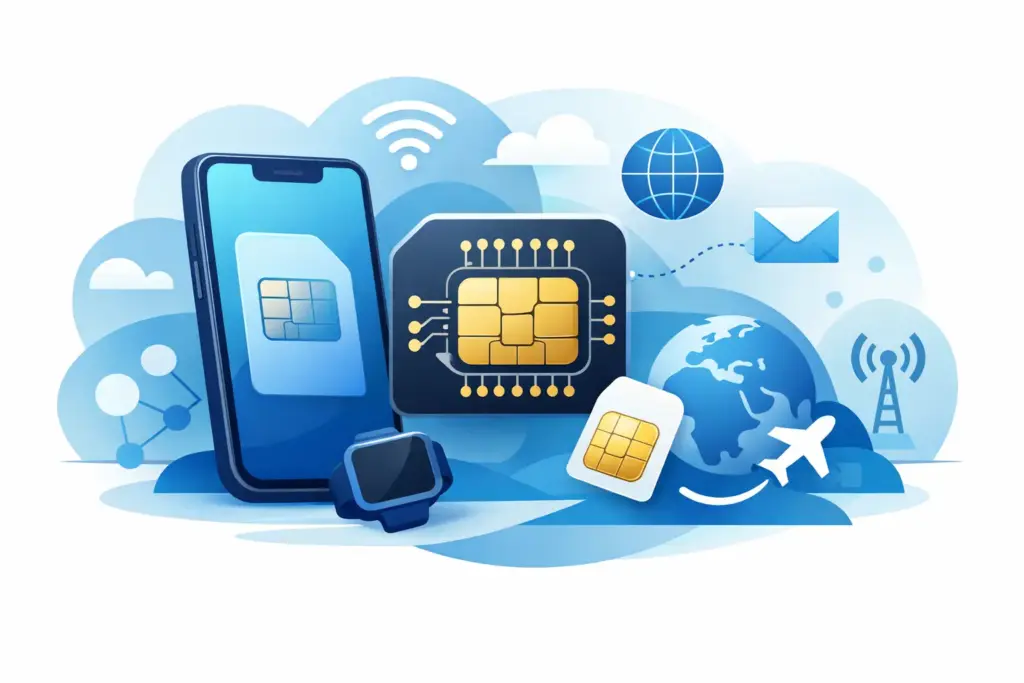
An eSIM is a digital SIM built into your phone. Instead of inserting a physical card, you install a mobile plan electronically, usually by scanning a QR code or entering details manually. Your device stores that plan and uses it to connect to a local network.
That sounds simple, and usually it is. But the setup depends on three things: whether your phone supports eSIM, whether it is carrier-unlocked, and whether the plan you’re buying matches how you actually travel. If any one of those is off, frustration starts fast.
The first check is compatibility. Many newer iPhones, Samsung Galaxy models, Google Pixel phones, and other premium devices support eSIM. Older phones often do not. Some phones also vary by region, so a model sold in one country may support eSIM while the same model sold elsewhere may not.
The second check is carrier lock status. A phone can support eSIM and still fail if it is locked to your home carrier. That’s a common point of confusion. Compatibility is about hardware and software. Unlocking is about permission. You need both.
The third check is plan type. Most travel eSIMs are data-only. That means you get internet access for maps, messaging apps, email, rideshare apps, and browsing, but not a new local phone number for traditional calls and texts. For many travelers, that’s perfectly fine. If you rely on WhatsApp, FaceTime, Google Meet, Slack, or Zoom, data-only often covers what matters.
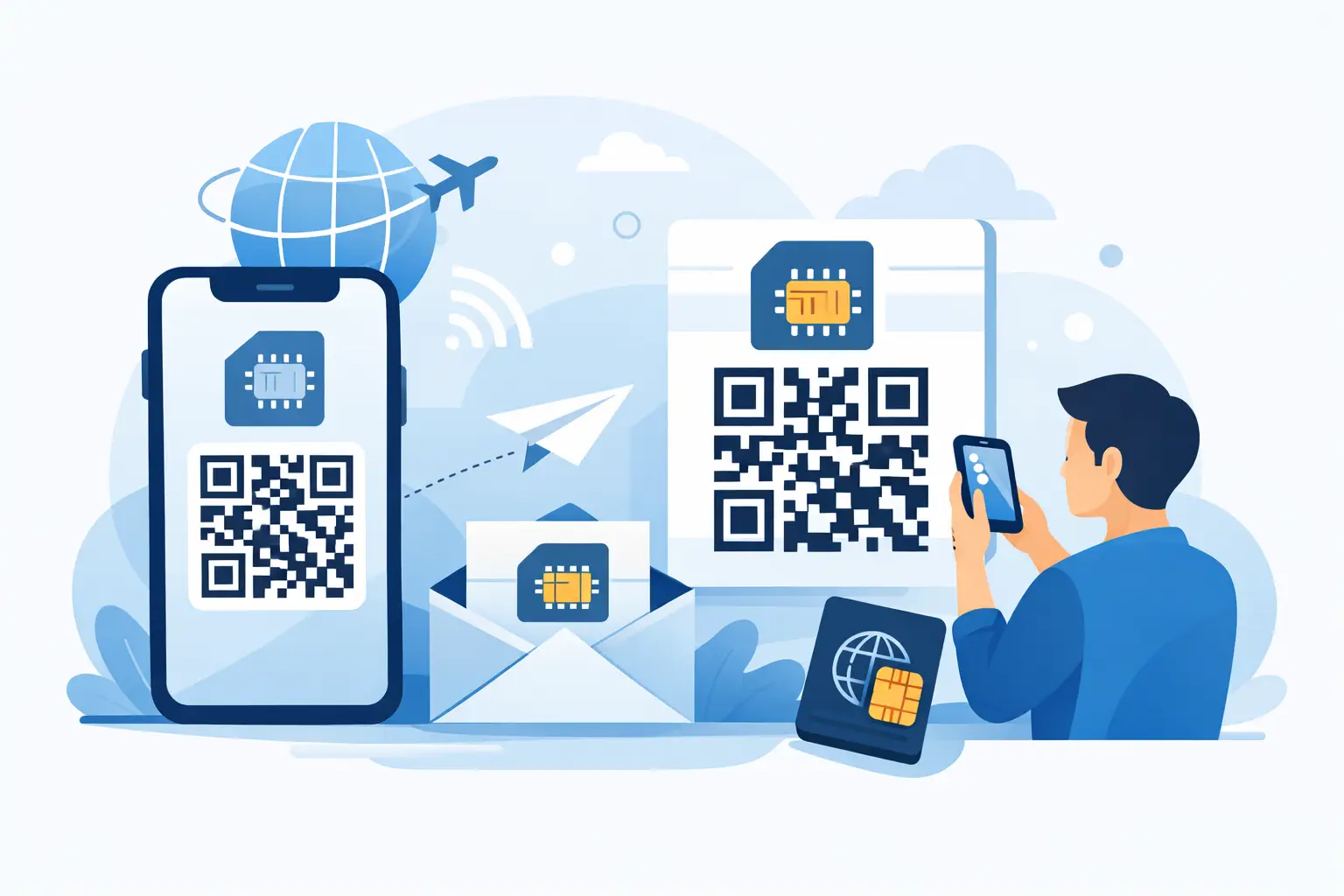
When you buy a travel eSIM, you’re usually purchasing access to a local or regional network through a digital provider. After purchase, you receive installation details instantly. In many cases, that’s a QR code. You scan it, add the cellular plan to your phone, and keep it stored there until you’re ready to use it.
This is where travelers save time. You can install the eSIM before departure while you’re still on stable Wi-Fi at home or in the airport. Then, once you land, you switch on that line and connect. No store visit. No language barrier. No waiting in line with a dead battery.
That said, installation and activation are not always the same thing. Installation means adding the eSIM to your phone. Activation means the plan starts working on the network. Some plans activate right away when installed. Others activate when they first connect in the destination country. That difference matters because it affects when your usage period begins.
If you’re leaving next week, installing early can be smart. If the plan activates on first network connection at your destination, you get the convenience without losing days. But you still need to read the plan terms, because activation timing varies.
The main benefit is convenience. eSIM removes the physical SIM swap and the scramble to get connected after arrival. It also makes it easier to compare plans in advance instead of buying whatever an airport kiosk pushes in the moment.
Another major benefit is transparency – at least when the provider is clear about limits. A good travel eSIM lets you know how much data you get, how long it lasts, whether hotspot is allowed, and what happens when you hit a cap. That’s a much better deal than vague promises and surprise throttling.
But there are trade-offs. eSIM is not magic. Setup can still go wrong if you scan the QR code on the wrong device, delete the plan by mistake, or try to activate on unsupported hardware. Some users also prefer a physical SIM because it feels familiar and easier to troubleshoot.
There is also a practical limit many travelers miss: data-only service changes how you handle calls and texts. Your banking app, airline alerts, or two-factor authentication may still depend on your main number. In that case, you may need to keep your primary line active for certain messages while using the eSIM for data.
Battery use can also increase if you run dual SIM with both lines active. That’s not a dealbreaker, but on long travel days it matters.
This is where smart travelers separate a good deal from a messy one. Price matters, but so does honesty.
Start with the data allowance. If you’re traveling for a weekend and mostly using maps and messages, a smaller plan might be enough. If you’re working remotely, tethering a laptop, uploading photos, or taking video calls, you’ll need much more. Buying too little can be just as annoying as overpaying for too much.
Next, check speed and fair-use limits. Some providers advertise unlimited data, then slow your connection hard after a small daily threshold. That’s not always a bad fit, but it needs to be stated clearly. If you need reliable speeds for work, transparency beats marketing every time.
Hotspot access is another detail worth checking before checkout. Some plans allow tethering freely. Others block it or cap it. If you plan to connect a laptop or tablet, don’t assume.
Coverage also deserves a closer look. A country plan may use one network partner, while a regional plan may switch between partners. Neither is automatically better. If you’re staying in one place, a local plan may offer stronger value. If you’re crossing borders, regional coverage can save hassle.
Finally, look for top-up flexibility and support policy. Travel does not always go to plan. Flights get delayed, trips get extended, and setup errors happen. A provider that makes top-ups easy and handles failed activations fairly is worth more than the absolute cheapest option.
The most common mistake is buying before checking device compatibility and unlock status. It sounds basic, but it’s the reason many first-time eSIM users get stuck.
Another mistake is waiting until arrival to install the plan. If airport Wi-Fi is weak and you need data to access your email, pull up your QR code, or contact support, the setup gets harder than it needs to be. Install before you leave while you still have a reliable connection.
Travelers also sometimes delete the eSIM after installation, assuming they can just scan the QR code again later. Depending on the provider, that may not work. Some eSIMs can only be installed once.
Then there is the “unlimited” trap. If a plan sounds cheap and limitless, read the policy carefully. Daily caps, speed reductions, and hidden restrictions are common in travel data. Fair, clearly stated limits are usually a better experience than hype.
Once you land, a few settings usually make the difference between instant service and a frustrating first hour.
Make sure the eSIM line is turned on and selected for mobile data. If you’re keeping your primary SIM active, double-check which line handles data and which handles voice. Disable data roaming on your home line if you want to avoid accidental carrier charges, and enable roaming on the travel eSIM if the provider requires it for partner network access.
If service doesn’t connect immediately, don’t panic. Restart the phone, confirm the right line is selected, and give the network a minute to register. Most issues are settings-related, not a sign that the eSIM is broken.
For travelers who want the simplest path, this is where a straightforward provider matters. TapSim, for example, focuses on prepaid travel data with clear limits, hotspot support, and no fake unlimited claims. That kind of clarity saves time because you know what you’re buying before wheels up.
For most international travelers, yes. If your phone supports it and you’re mainly looking for fast, predictable mobile data abroad, eSIM is usually the easiest option. It cuts out the store visit, reduces roaming risk, and gives you more control before the trip starts.
Still, it depends on how you travel. If you need a local phone number, use an older device, or prefer in-person help, a physical SIM may still make sense. But if your priority is getting online quickly, keeping costs clear, and avoiding travel-day friction, eSIM is hard to beat.
The best approach is simple: check your phone, read the limits, install before departure, and choose a plan that tells the truth. When travel connectivity is clear from the start, everything else gets easier.