How to Activate eSIM on Arrival
Learn how to activate eSIM on arrival without delays. Set up before takeoff, avoid roaming fees, and get mobile data working fast abroad.
You land, switch off airplane mode, and expect your data to work. Then the surprises start – throttled speeds after a tiny usage cap, hotspot blocked without warning, or a top-up price that looks nothing like the original plan. If you’re searching for a travel eSIM no hidden fees option, that’s usually what you’re trying to avoid: not just a high bill, but unclear rules.
The problem is that many travel data plans look simple at checkout and get complicated once you’re on the move. “Unlimited” may mean high-speed data for one or two gigabytes a day, then much slower service after that. A regional plan may exclude the exact country where you have a layover. Some providers make activation sound instant, but leave out device compatibility checks or setup timing. Cheap upfront pricing can still turn into an expensive travel mistake.
Price matters, but travel stress usually comes from the gap between what you thought you bought and what the plan actually does. A $10 plan is not a bargain if it cuts to unusable speeds halfway through a work call. A plan labeled unlimited is not really flexible if tethering is blocked and you need your laptop online at the airport.
That’s why a travel eSIM no hidden fees plan should be judged on clarity first. You want the real cost, the real data allowance, the actual speed policy, and clear rules for hotspot use. If those details are hard to find, that’s the warning sign.
For most travelers, the best plan is not the cheapest or the largest. It’s the one that matches how you actually travel. A weekend city break has very different needs than a two-week work trip with video calls, maps, ride-share apps, and hotspot use. Transparency lets you buy the right amount once instead of fixing a bad purchase later.
Hidden fees do not always appear as a surprise charge on your card. More often, they show up as missing context.
The most common issue is vague data language. If a plan says unlimited but does not clearly explain speed caps or fair-use limits, assume there is a trade-off. That doesn’t make the plan bad. It just means the provider should say exactly when speeds change and by how much. If they don’t, you’re buying uncertainty.
Another common issue is top-up pricing. Some plans are attractively priced at first, but extensions cost much more per gigabyte than the original package. That matters if your usage is hard to predict. If you expect to stream, hotspot, or work remotely, check whether topping up is straightforward and whether pricing stays reasonable.
Regional exclusions also catch travelers off guard. A Europe plan may cover dozens of countries but miss one stop on your itinerary. Airport transfers, border crossings, and side trips can expose these gaps fast. Coverage lists need to be specific, not broad and fuzzy.
Then there’s activation friction. Some eSIMs are easy to install but harder to start using. You may need to toggle data roaming on for the eSIM line, set the right cellular data line, or install the eSIM before departure while you still have stable Wi-Fi. Providers should explain this plainly. If they skip setup guidance, the plan can feel broken even when it isn’t.
Start with the plan details, not the marketing line. You should be able to find the data amount, validity period, speed terms, hotspot support, activation steps, and top-up options without hunting through support pages.
Look for exact numbers. If a plan includes 5GB for 15 days, that’s clear. If it says unlimited, look for the fair-use policy and any speed cap after a threshold. For light travelers, a capped plan may actually be the better deal because it is honest from the start. For heavier users, a daily fair-use model may work well if the threshold is clearly stated and realistic for your needs.
This matters more than many travelers expect. If you carry a laptop or tablet, hotspot access can be the difference between a useful plan and a frustrating one. Some providers limit or block tethering, while others allow it but reduce speed. A no-hidden-fees offer should make this obvious before checkout.
Not every phone supports eSIM, and not every eSIM-compatible phone is carrier-unlocked. This is one of the biggest reasons travelers run into setup problems. A trustworthy provider will tell you to confirm both compatibility and unlock status first. That’s not extra friction. It’s honesty.
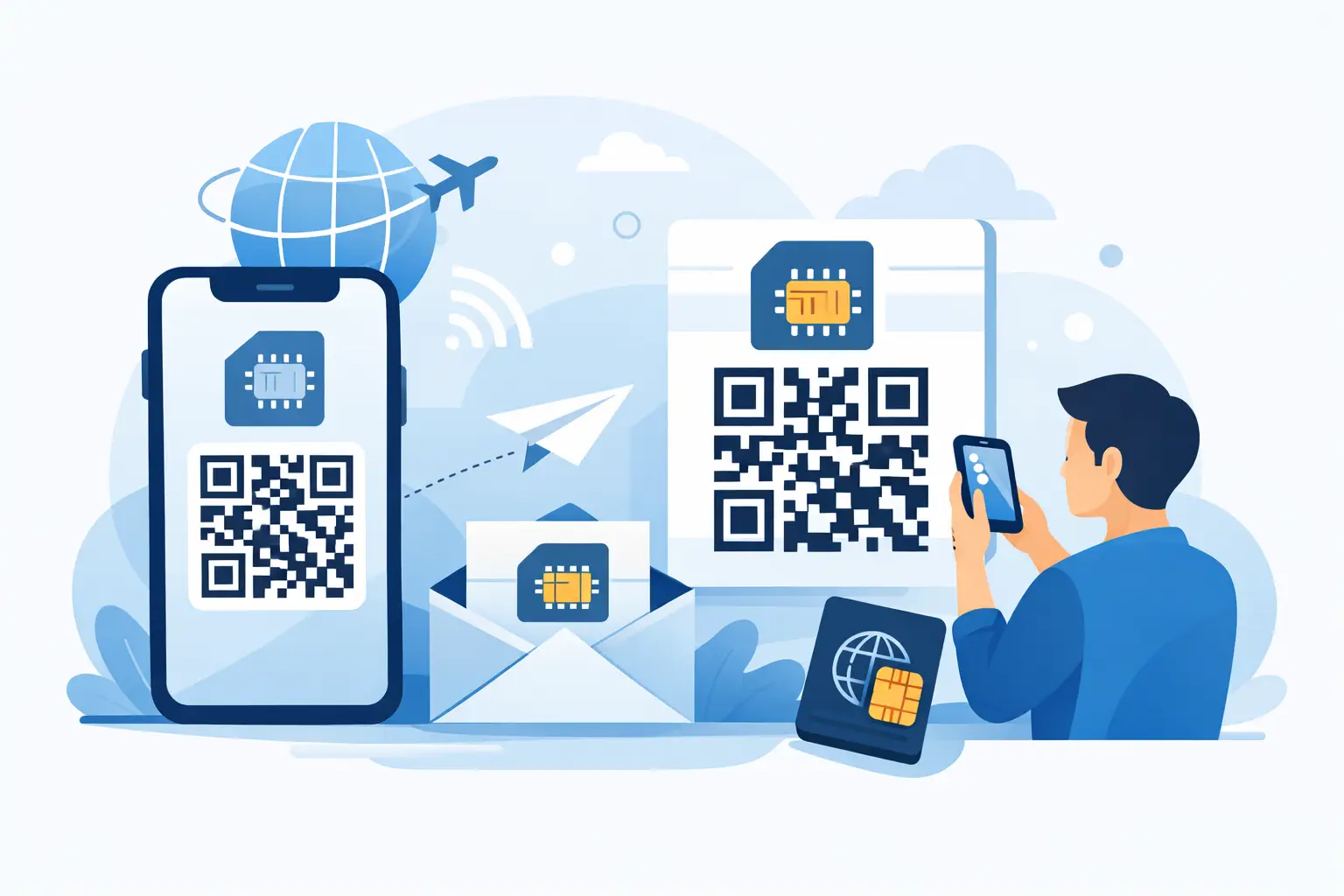
Instant delivery is great, but only if the setup is clear. You should know whether the QR code can be installed before travel, when the validity starts, and what triggers activation. Some plans activate when installed. Others start when they connect to a supported network at your destination. That difference matters if you want to prepare early without wasting days.
This is where many travelers get burned. Unlimited sounds simple. In practice, it often means a certain amount of full-speed data followed by slower speeds, traffic management, or daily resets. Sometimes that slower speed is still usable for messaging and maps. Sometimes it’s not enough for much at all.
That doesn’t mean you should avoid every unlimited plan. It means you should treat unlimited as a category, not a guarantee. If you mainly need navigation, messaging, email, and occasional browsing, a clearly explained unlimited plan may be fine. If you rely on hotspot, video meetings, cloud uploads, or heavy streaming, a fixed high-speed allowance with transparent top-ups can be the safer choice.
Honest providers say this out loud. They do not hide behind a big unlimited badge and hope you won’t read the details until after arrival.
The best experience is boring in the best way. You buy online. You receive the QR code right away. You install before departure. You land, activate, and connect. No store visits. No surprise roaming bill. No argument over whether tethering is included.
A fair provider also gives you enough information to self-serve. That means setup steps written for real travelers, not telecom insiders. It means clear labels on country coverage, validity, and data rules. It means refund support if activation fails for reasons outside your control. If a company claims transparency but gets slippery when something goes wrong, the promise is not worth much.
This is where TapSim’s approach stands out. The value is not just prepaid travel data. It’s the plain-English promise behind it: no hidden fees, no fake unlimited claims, and no roaming traps dressed up as convenience.
A low price can make sense for a short trip with simple needs. But cheaper is not always better if the terms force you into extra purchases later. A plan with clear limits, fair top-ups, and usable speeds may cost slightly more upfront and save money overall.
It depends on how you travel. If you’re a tourist using maps, messaging, and restaurant searches, a modest prepaid package is often enough. If you’re a remote worker, content creator, or frequent hotspot user, buying too little data almost always costs more in the end – either in expensive top-ups or lost time spent hunting for Wi-Fi.
This is why transparency beats aggressive pricing. Honest terms let you estimate your real needs before the trip instead of guessing and paying for the mistake later.
Before choosing any travel eSIM no hidden fees plan, ask five basic questions. How much high-speed data do I actually get? Does hotspot work? Which countries are covered? When does the plan activate? What happens if setup fails?
If the answers are easy to find and easy to understand, that’s a good sign. If the details feel buried, vague, or overly promotional, keep looking. Travel data should remove friction from your trip, not create a new problem to manage at the gate.
The best travel eSIM is not the one with the loudest claim. It’s the one that tells the truth before you buy, works when you land, and lets you get on with your trip without second-guessing every gigabyte.