Best eSIM for Europe Trip: What to Pick
Looking for the best esim for europe trip plans? Compare coverage, speed caps, hotspot rules, and pricing to avoid roaming fees and surprises.

You land, clear customs, and before you even leave the airport, Slack is buzzing, your map app needs data, and your next call starts in 20 minutes. That is exactly why an esim for digital nomads is not a nice extra. It is basic infrastructure. If your internet fails, work gets messy fast.
For remote workers, connectivity is not just about getting online. It is about staying reachable, tethering a laptop when Wi-Fi falls apart, and avoiding the usual travel telecom nonsense – roaming charges, vague limits, and plans that say “unlimited” until they quietly slow to a crawl. A good eSIM solves that. A bad one creates a new problem in a different package.
Digital nomads need speed, but they also need control. An eSIM gives you both when it is done right. You can buy a plan before departure, install it in minutes, and activate it when you arrive. No store visit. No paper packaging. No hunting for a kiosk after a red-eye flight.
That convenience matters, but the real advantage is flexibility. If you move between countries often, swapping physical SIM cards gets old fast. You lose time, risk losing your home SIM, and deal with different top-up systems in every market. An eSIM keeps the process cleaner. You manage plans digitally, keep your main number in place if your phone supports it, and stay ready for the next border crossing.
There is also a money angle. Traditional carrier roaming is often the worst of both worlds – expensive and unclear. Local SIMs can be cheap in some countries, but they come with friction: language barriers, ID requirements, store hours, and plan terms that are not always obvious. For a nomad who values time as much as price, that trade-off does not always make sense.
Price matters, but it should not be the only thing you compare. The cheapest plan can be a bad deal if the data policy is vague or hotspot use is blocked.
Coverage comes first. Not all eSIM plans are built the same way. Some use strong local network partners in each country. Others rely on weaker agreements that look fine on a country list but perform poorly in practice. If you are moving between major cities, almost any decent plan may work. If your trip includes smaller towns, islands, or rural areas, network quality matters a lot more.
The next issue is data policy. This is where travel SIM marketing often gets slippery. “Unlimited” can mean full speed for a small daily allowance, then heavy throttling. It can mean video restrictions. It can mean fair-use rules buried in the fine print. For digital nomads, honesty beats hype every time. A clearly stated speed cap or fair-use limit is easier to plan around than a flashy promise that falls apart when you start working.
Hotspot access is another make-or-break detail. Many remote workers use phone tethering as a backup when apartment Wi-Fi drops or coworking internet gets unstable. If a plan does not allow hotspot use, or limits it heavily, that changes its value right away. This is one of those details people often miss until they need it.
Then there is top-up flexibility. Nomad travel rarely runs exactly on schedule. You may stay longer in one place, leave earlier than planned, or burn through data during a week of video calls. A plan that lets you top up easily is far more useful than one that forces you into a brand-new setup every time your needs change.
Not every phone supports eSIM, and not every eSIM-compatible phone works the same way across all markets. Before you buy anything, check your device model and whether it is unlocked. That second part trips people up more than they expect.
An unlocked phone can connect to carriers outside your home provider. A locked phone usually cannot, even if it technically supports eSIM. If you bought your phone through a carrier contract, do not assume it is ready for international eSIM use. Verify it.
Dual SIM behavior also matters. Many digital nomads want to keep their regular number active for texts or two-factor authentication while using a travel eSIM for data. That setup is often possible, but it depends on the device and your settings. If you rely on banking apps, work logins, or SMS-based security, take five minutes to understand how your phone handles primary and secondary lines before you travel.
The best time to install an eSIM is before departure, while you still have stable Wi-Fi and room to troubleshoot. Waiting until arrival sounds fine until you are tired, juggling bags, and trying to scan a QR code in an airport with spotty public internet.
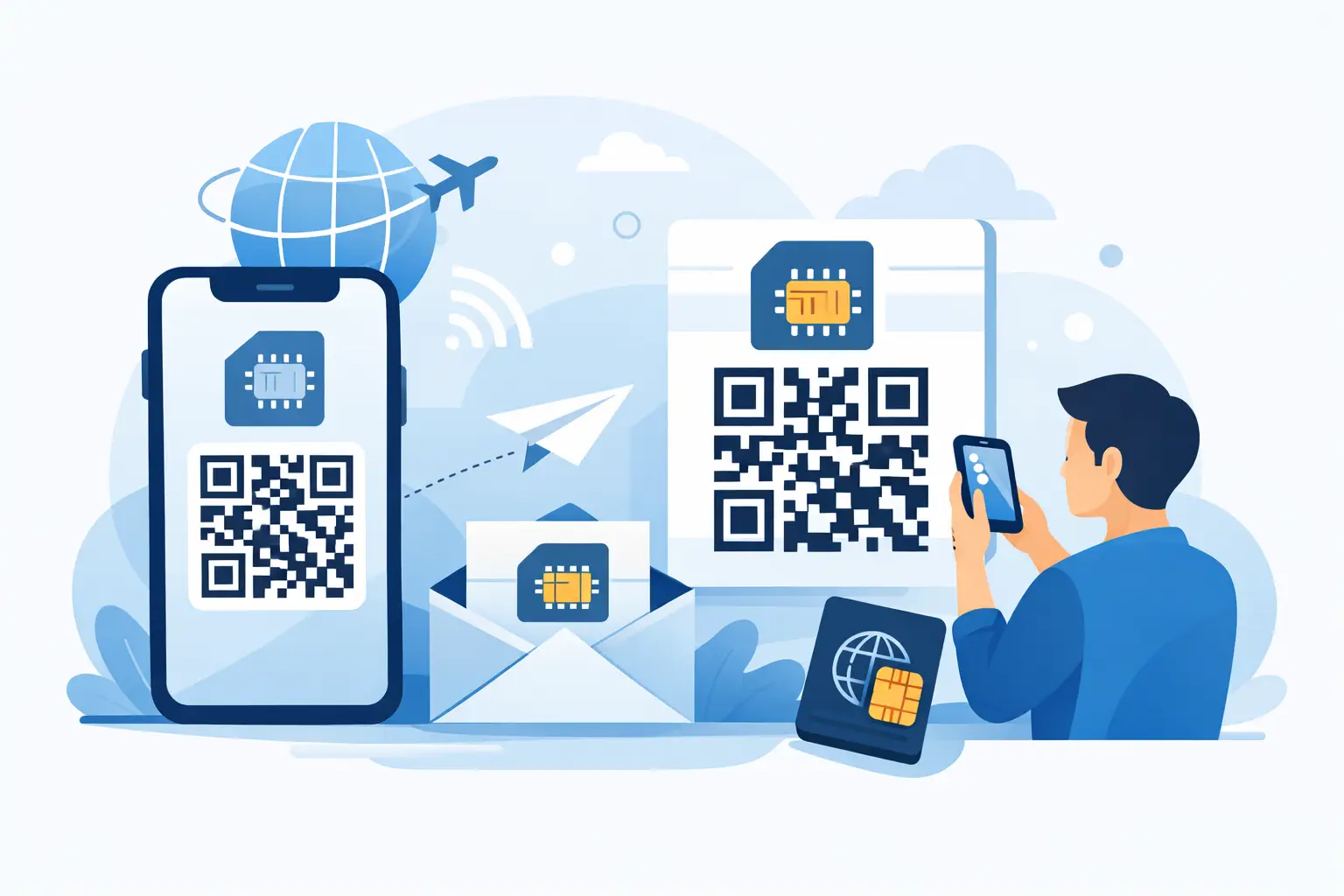
A smooth setup process usually looks like this: buy online, receive the QR code right away, install the eSIM on your phone, and leave it ready to activate when you land. That is the standard remote workers should expect. Fast, clear, and self-service.
Still, there are a few common mistakes. People delete the eSIM profile too early, scan the code on the wrong device, or forget to switch data lines after landing. None of these problems are complicated, but they are annoying when you are in transit. A provider with clear instructions saves time because it reduces those preventable errors.
It depends on how you travel.
If you are staying in one country for several months and want the absolute lowest local rate, a local physical SIM or local eSIM may win on price. That is especially true if you are comfortable dealing with local telecom stores and local-language plan terms. For slow travelers, the extra work may be worth it.
If you move frequently, though, convenience starts to matter more. An eSIM built for travelers is usually the better fit because it cuts down setup time and keeps you connected from the start. You are paying for simplicity, speed, and less hassle. For many digital nomads, that is a fair trade.
As for home-carrier roaming, it is rarely the best answer for longer trips. It can work as a short-term backup, especially for a day or two, but it is often overpriced and unclear once you look past the headline offer. If you have ever come home to a surprisingly high phone bill, you already know the problem.
This deserves its own section because it causes so much confusion.
When a travel data plan says “unlimited,” ask what happens after heavy usage. Does the speed drop? At what threshold? Is hotspot included? Are there limits on streaming, video calls, or tethering? If those answers are hard to find, that is a warning sign.
For remote work, predictable performance beats vague abundance. A plan with clearly published limits is often more useful than an “unlimited” plan with secret brakes. You cannot plan workdays around marketing language.
That is why transparency matters more than buzzwords. Fair use is not the problem. Hidden fair use is the problem. Some providers, including TapSim, lean into that distinction by publishing speed caps, hotspot access, and top-up terms clearly. That is how this category should work.
It depends on your work style. If you mostly use messaging apps, maps, email, and light browsing, your usage can stay modest. If you take frequent Zoom calls, upload large files, or use hotspot as a laptop backup, your data needs rise quickly.
Many nomads underestimate hotspot consumption. A single workday on tethered laptop internet can eat through data faster than expected, especially if cloud sync, software updates, or video calls are running in the background. If your phone is your backup office, buy with that in mind.
A smart approach is to treat mobile data as essential coverage, not just emergency coverage. If your apartment Wi-Fi goes down for half a day, your mobile plan should be able to carry you without panic.
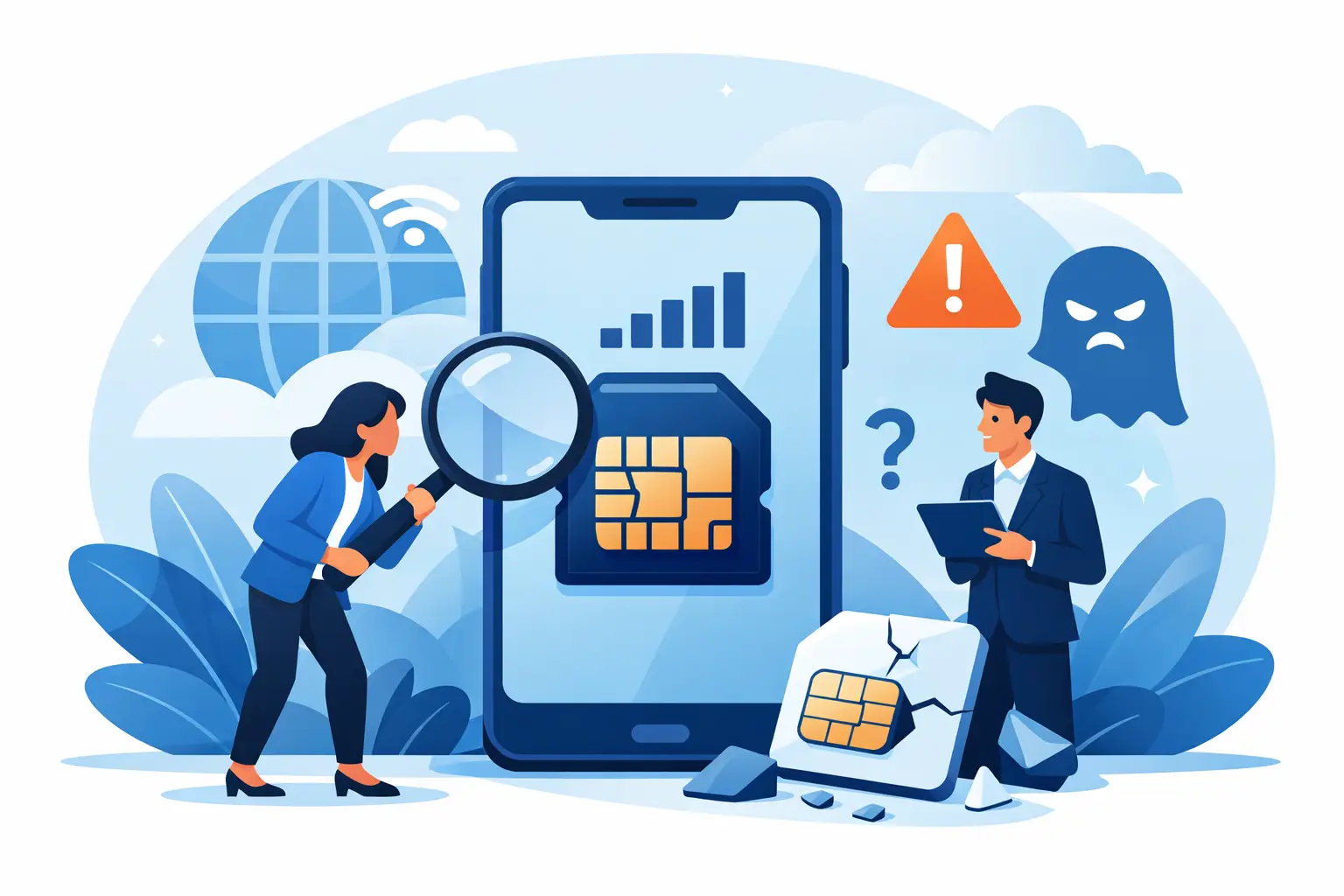
You should not need detective skills to buy travel data.
A good provider is clear about what the plan includes, when it activates, whether hotspot is allowed, how top-ups work, and what happens if setup fails. It should be easy to install, easy to understand, and easy to trust. If the offer looks cheap but the terms are fuzzy, that is usually not a bargain.
For digital nomads, the right eSIM is the one that removes friction. It gets you online quickly, stays honest about limits, and gives you a workable backup when local Wi-Fi lets you down. That is the real standard.
Before your next flight, think less about flashy claims and more about reliability. The best travel data plan is not the one with the loudest promise. It is the one that works the way you expected when you need it most.