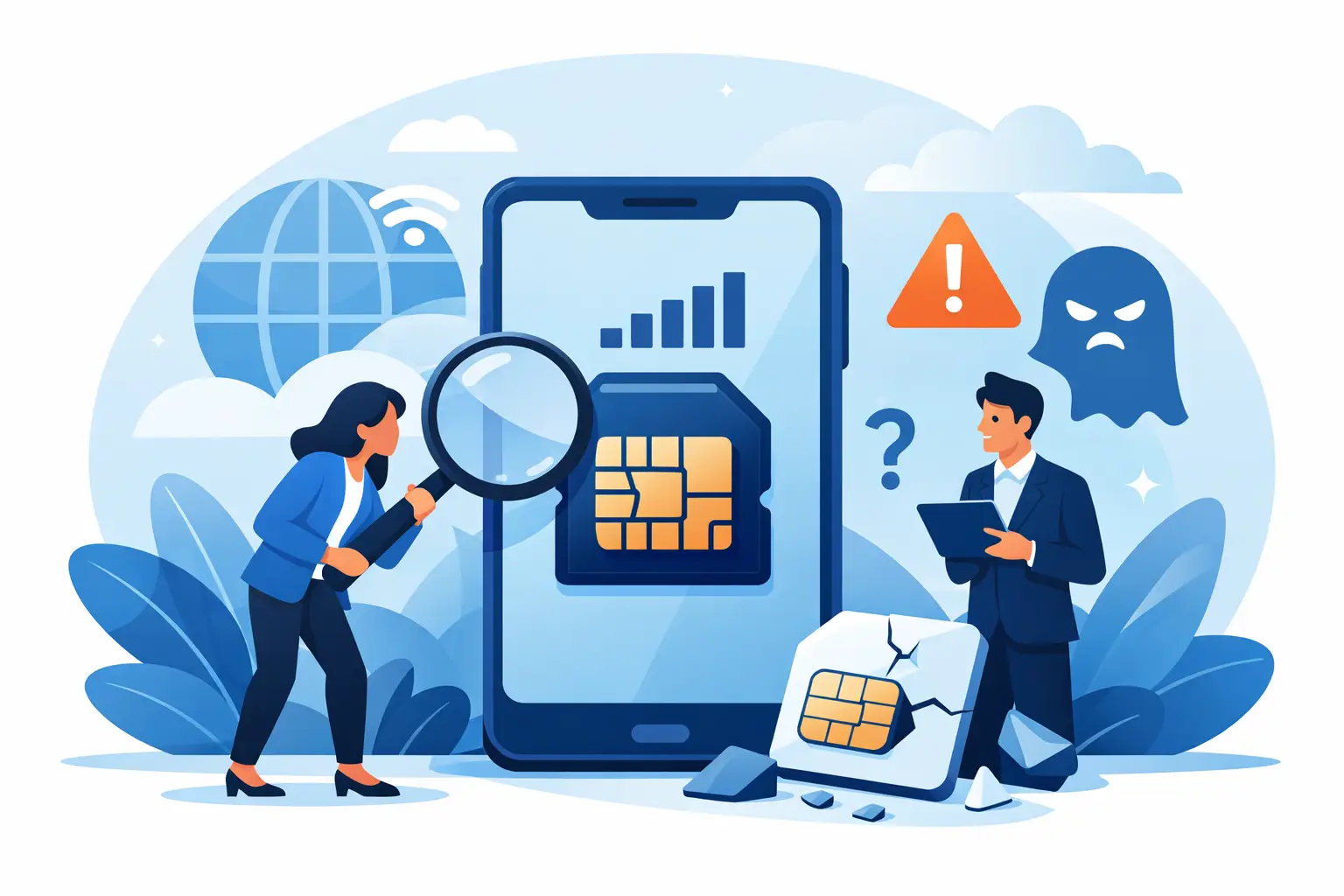
eSIM for Digital Nomads: What Actually Matters
Choosing an esim for digital nomads? Learn what matters most - coverage, speed caps, hotspot rules, setup, and avoiding fake unlimited plans.

Landing in Rome, Paris, or Barcelona without data gets old fast. You need maps, ride-share apps, hotel check-in details, and a way to message people back home. That is why finding the best esim for europe trip planning matters before you leave, not after you land.
The problem is not a lack of options. It is too many vague ones. Plenty of travel SIM sellers promise “unlimited” data, then slow your connection to a crawl after a small fair-use threshold. Others hide hotspot restrictions, make setup harder than it should be, or leave you guessing which countries are actually covered. If you want a plan that works, the best choice is usually the one that is clearest about what you are getting.
For most travelers, the right eSIM is not the one with the flashiest marketing. It is the one that matches your route, your data habits, and your tolerance for friction.
If you are visiting multiple countries in one trip, regional Europe coverage is usually the better pick than a single-country plan. That sounds obvious, but it matters more than people think. A cheap France-only eSIM can become expensive the moment your itinerary adds Belgium, Italy, or Switzerland. If your route includes train travel or short border crossings, broad coverage saves hassle.
Speed policy is the next thing to check. This is where many travelers get burned. A provider may advertise a large or unlimited plan, but the real experience depends on whether there is a daily cap, a throttling threshold, or network deprioritization after heavy use. If you rely on data for work, navigation, tethering, or video calls, that fine print matters more than the headline number.
Hotspot access is another deal-breaker for many people. Some travelers need to connect a laptop on the go. Others just want backup internet for a tablet or a travel companion. Not every eSIM allows tethering, and some allow it only on certain plans. If hotspot use matters to you, treat it as a must-check, not a nice extra.
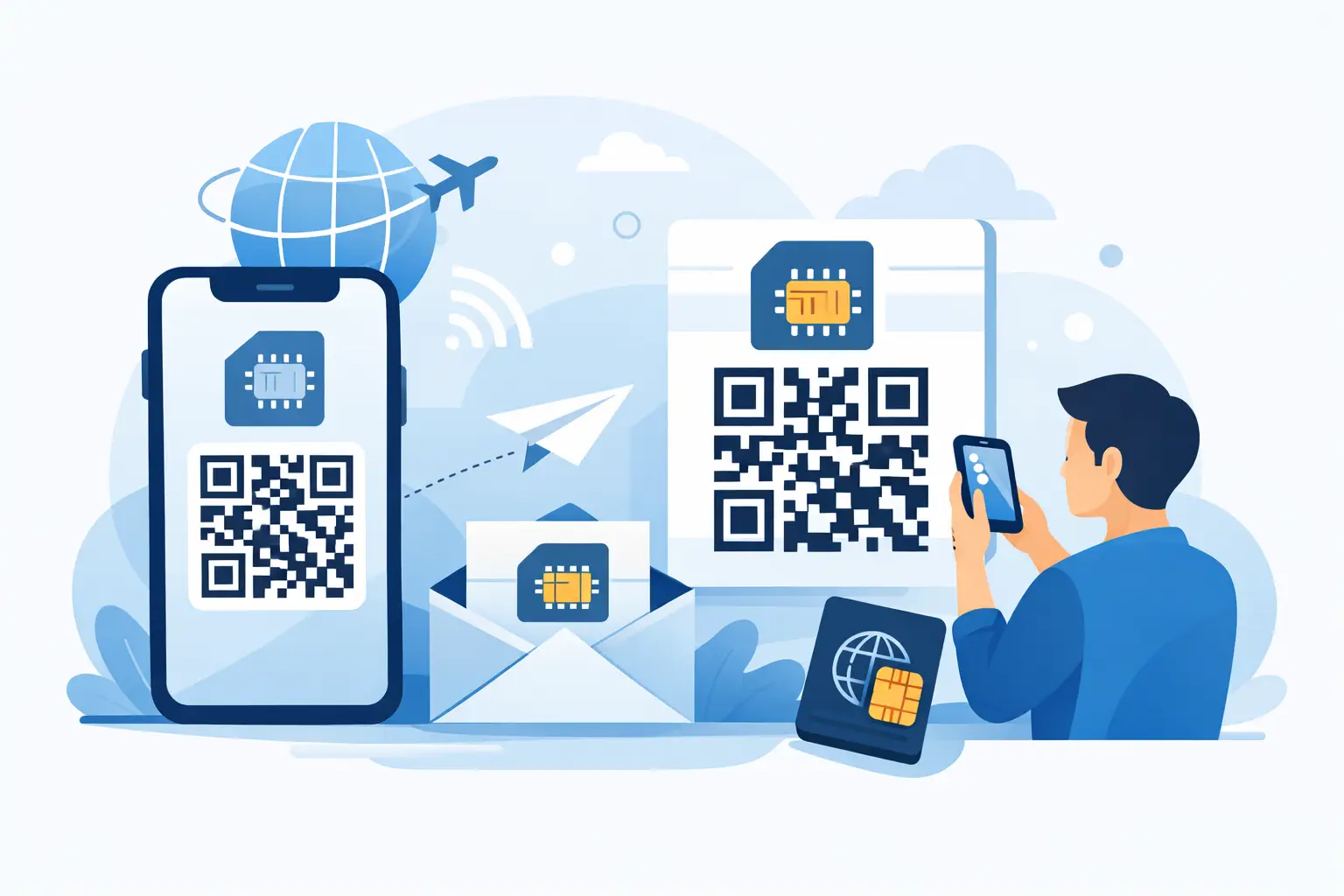
Then there is activation. The best eSIM for Europe trip prep should be easy to install before departure and simple to activate when you arrive. Instant delivery, QR code setup, and clear instructions reduce stress. You do not want to troubleshoot mobile settings in an airport line after an overnight flight.
Most mistakes happen because travelers shop by price alone. Cheap can be fine, but only if the plan actually fits the trip.
A weekend city-break traveler has different needs than a remote worker moving through six countries in three weeks. If you are mostly using maps, messaging, and occasional browsing, a moderate data plan will likely do the job. If you plan to upload content, stream often, or run a laptop from your phone hotspot, a bargain plan may run out quickly or slow down at the worst time.
Another common mistake is confusing data-only service with full mobile service. Many travel eSIMs are data-only. That is not necessarily a downside. For lots of US travelers, data-only is enough because apps like WhatsApp, FaceTime, Google Meet, Telegram, and email handle most communication. But if you expect a local phone number for standard calls or texts, you need to confirm whether that is included. Often, it is not.
Compatibility is the other issue people ignore until checkout. Not every phone supports eSIM, and not every carrier-unlocked device plays nicely with international plans. Before you buy anything, make sure your phone is both eSIM-compatible and unlocked. That two-minute check can save a lot of frustration.
Start with your route. If you are visiting one country and staying put, a single-country eSIM may offer better value. If you are moving between countries, choose a Europe-wide plan that clearly lists where it works. Do not assume “Europe” includes every stop on your itinerary. The UK, Switzerland, and smaller Balkan markets are often where assumptions go wrong.
Next, estimate your data realistically. Light users often get by with a few gigabytes over a short trip. Moderate users need more breathing room, especially if they use social apps, maps, and video. Heavy users should look for higher caps and clear top-up options instead of vague unlimited claims. Honest limits are better than marketing tricks.
After that, check the speed and fair-use policy. Clear providers will tell you exactly what happens when you hit the cap, whether speeds are reduced, and whether you can top up. This is where transparency separates reliable travel eSIMs from frustrating ones.
Setup should also be part of your decision. Buy online, receive the QR code immediately, install before departure, and activate when you arrive. That is the smoothest path. If a seller makes the process feel complicated on the sales page, it usually does not get easier later.
Finally, look at support and refund policy. Travel days are messy. Flights get delayed, phones act up, and settings get missed. A refund-friendly provider that helps when activation fails is worth more than a slightly cheaper plan with no safety net.
This choice depends on how you travel.
If your trip is seven days in Italy and nowhere else, a country-specific eSIM can make sense. It may cost less, and you may not need wider coverage. But if there is any chance your plans expand, even by one day trip, a regional plan may be the smarter buy.
Regional Europe eSIMs are especially useful for multi-city itineraries, rail travel, cruises with land stops, business trips, and digital nomads who book loosely. They remove one more thing to think about. No swapping plans. No buying a second SIM halfway through the trip. No surprise roaming if you cross a border and forget your plan was limited.
The trade-off is that regional plans are not always the cheapest on paper. But many travelers gladly pay a little more for simplicity, especially on trips where convenience matters as much as price.
A trustworthy eSIM seller does not make you guess. You should be able to see how much data you get, how long it lasts, whether hotspot is allowed, whether there is any speed cap, and what happens if you use everything.
That matters because fake unlimited plans are everywhere in travel connectivity. A plan can sound generous while quietly becoming nearly unusable after a small amount of daily data. For travelers, that is worse than a fixed data cap with a clear top-up path. At least with a transparent plan, you know where the line is.
This is one reason some travelers prefer providers like TapSim. The appeal is not just the digital delivery. It is the plain-language promise: no hidden fees, no roaming traps, no fake unlimited plans. That kind of clarity helps people buy with confidence, especially when they are trying to sort travel logistics quickly.
Remote workers are at the top of the list. Hotspotting to a laptop, joining video calls, uploading documents, and using cloud tools can eat through a travel plan faster than expected.
Content creators and frequent social media users should also be realistic. Uploading videos, posting stories all day, and backing up photos over mobile data adds up. So does streaming in hotels with weak Wi-Fi.
Families and couples who share one connection need to plan carefully too. A hotspot-friendly eSIM can be a great solution, but shared data disappears faster than solo data. If one person is navigating, another is streaming, and a third is gaming in the hotel, a low-cap plan will not last long.
On the other hand, some travelers overbuy. If you use hotel Wi-Fi at night, download maps in advance, and mainly rely on messaging and navigation during the day, you may need less data than you think. The best plan is not always the biggest one. It is the one that fits your trip without waste.
The easiest move is to buy before departure, install the eSIM at home, and keep your activation timing clear. That way, you land with a connection ready instead of hunting for airport Wi-Fi. It also gives you time to confirm your device settings and troubleshoot anything small before travel day.
If your phone supports multiple SIM profiles, keeping your regular line and travel data plan separate can be useful. You can often leave your primary number active for essential texts while using the eSIM for data. Just make sure you understand your home carrier’s roaming settings so you do not trigger accidental charges.
A little prep goes a long way here. Check compatibility. Read the policy. Know your data limit. Then travel.
The best eSIM for a Europe trip is usually the one that feels boring in the best possible way – clear price, clear limits, easy setup, and data that simply works when you need it. When you are crossing borders, catching trains, and trying to enjoy the trip, honest connectivity is one less thing to worry about.