eSIM for Business Travel: What to Know
Learn how esim for business travel cuts roaming costs, speeds arrival setup, and keeps teams connected with clear data limits and fewer surprises.
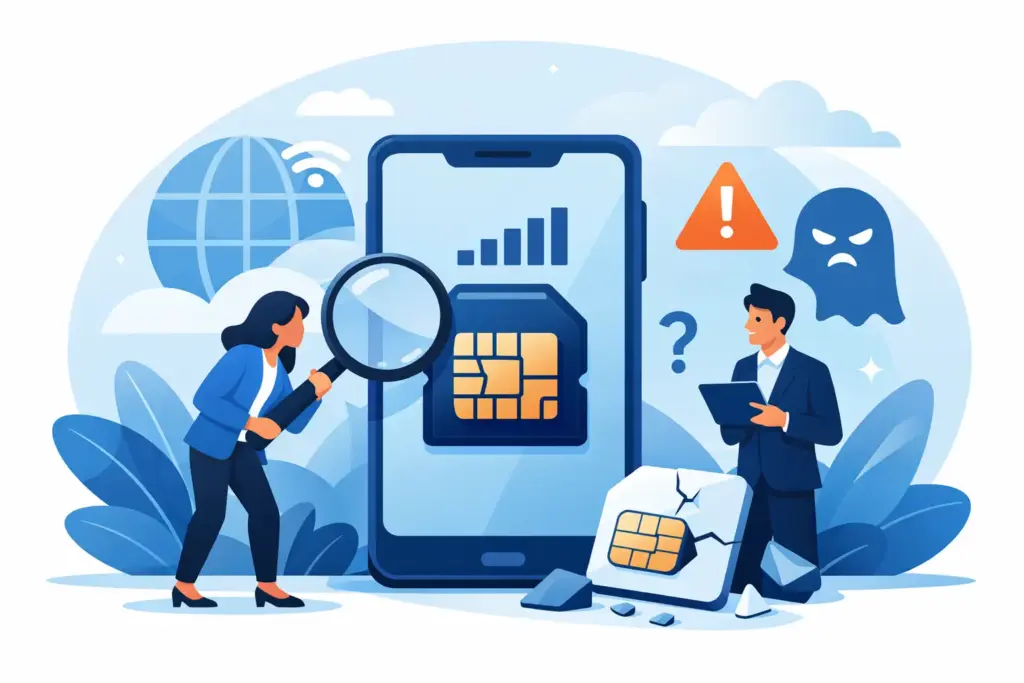
You land, turn off airplane mode, and see full bars. Great. Then your map stalls, your rideshare app freezes, and the “unlimited” plan you bought suddenly feels very limited. That is the real problem with fake unlimited eSIM plans. The issue is not just marketing language. It is what happens when you are tired, in transit, and depending on data that was sold as worry-free.
Travelers do not need buzzwords. They need clarity. If a plan slows to unusable speeds after a small amount of high-speed data, blocks hotspot use, or hides fair-use limits in the fine print, calling it unlimited is misleading at best. When you are abroad, that kind of surprise is more than annoying. It can leave you without directions, check-in access, translation tools, or a way to contact someone.
Most fake unlimited eSIM plans are not completely fabricated. They do provide data. The catch is in how that data works after a certain point.
A common setup goes like this: a provider advertises unlimited data for 7, 15, or 30 days, but only the first 1GB or 2GB per day is delivered at usable speed. After that, your connection may be throttled so hard that basic browsing becomes frustrating. Some plans reduce speeds to 128 kbps or 256 kbps. Technically, data still flows. Practically, your trip gets harder.
Another version hides a fair-use cap across the full plan period. You may buy an “unlimited” package for two weeks, only to find that network management starts after 20GB or 30GB total. Some carriers also reserve the right to deprioritize traffic at busy times, which means your service may work fine at breakfast and crawl at the airport by noon.
That does not mean every unlimited plan is dishonest. Some are fair. Some clearly explain the daily high-speed allowance, reduced-speed terms, and hotspot rules up front. The problem is not the word itself. The problem is when the details are buried, vague, or missing.
At home, weak data is an inconvenience. Abroad, it can derail your day fast.
Travelers rely on mobile data for almost everything that keeps a trip moving. Navigation, mobile boarding passes, hotel messaging, banking alerts, work calls, two-factor authentication, and local transport apps all depend on a stable connection. If your plan becomes unusable after a hidden threshold, you may not realize it until you are standing in a station or trying to reach your next stop.
There is also less room for trial and error when you travel. You may not speak the local language. You may not have store access nearby. And if you bought a digital plan because you wanted to avoid local SIM hassle, discovering that your “unlimited” service comes with major limits defeats the whole point.
This is why transparent travel eSIMs matter. Honest limits are easier to plan around than inflated promises. A traveler can work with 10GB, 20GB, or a daily cap if the rules are stated clearly. What creates stress is paying for certainty and getting ambiguity instead.
If you want to avoid fake unlimited eSIM plans, stop looking at the headline first. Look at the usage policy.
The most revealing phrase is usually “fair use.” That term is not automatically bad. Networks need traffic management. But if a provider uses fair use without explaining the threshold, speed after the limit, or whether the cap resets daily, that is a red flag.
You should also check whether the plan specifies high-speed data. That one phrase changes everything. “Unlimited data” and “unlimited high-speed data” are not the same product. If only a small portion is high speed, the rest may be too slow for maps, video calls, cloud apps, or tethering a laptop.
Hotspot access matters too. Some travelers assume they can share their data with a tablet or laptop, especially remote workers and families. Many supposedly unlimited plans either block hotspot use or count tethering separately. If that rule is not listed clearly, assume nothing.
Then there is network priority. Some providers have the right to slow traffic whenever the local network is congested. Again, this is not unusual on its own. What matters is whether it is explained clearly enough that you know what you are buying.
A trustworthy travel eSIM plan is usually less dramatic in how it sells itself. That is a good sign.
Honest providers tend to publish exact data allowances, plan length, supported countries, and whether the service is data-only. They tell you if speeds are capped. They tell you if hotspot is allowed. They tell you what happens when your data runs out and whether top-ups are available. That kind of detail may look less flashy than a giant “unlimited” banner, but it is far more useful when your trip starts.
Another good sign is clear activation guidance. If a provider explains device compatibility, setup timing, and how activation works on arrival, they are usually thinking about the actual traveler experience rather than just the sale. The same goes for refund language. If activation fails, there should be a straightforward path to support or a refund review.
This is where a no-nonsense approach stands out. TapSim, for example, avoids fake unlimited claims and instead publishes plan terms clearly so travelers know what they are getting before checkout. That is how travel connectivity should work – fair, fast, and honest.
Because it sells.
For many shoppers, unlimited sounds safer than doing the math on gigabytes. Providers know that. They also know that most travelers will not burn through huge amounts of data every day, so the gap between expectation and reality may not become obvious until later.
There is also a legal gray area in some markets. If data technically continues after throttling, some companies believe they can still market the plan as unlimited. From a strict definition, that may pass. From a customer perspective, it can still be misleading.
That is why the better question is not, “Is this plan unlimited?” It is, “How much usable data do I get, at what speed, under what conditions?” Usable data is what matters.
A clearly defined 10GB or 20GB plan is often the smarter buy for travel.
It gives you a real number to work with. You can estimate your needs based on maps, messaging, social media, hotspot use, and work tasks. You can top up if needed. Most important, you know where the line is. That is far better than buying an unlimited plan that turns unreliable after light use.
Of course, it depends on your travel style. If you stream constantly, join video meetings on mobile data, or tether a laptop every day, a plan with a published daily high-speed allowance may still work for you. But if the provider cannot explain that allowance clearly, move on.
For lighter users, fixed data is usually enough. For heavier users, transparent speed and fair-use terms matter more than marketing labels. Either way, honesty beats hype.
Before purchasing any travel eSIM, read the plan details like you are already on the trip and depending on it. Check the total data amount or daily high-speed allowance. Check whether the plan is data-only. Check if hotspot is included. Check supported countries, validity period, activation steps, and top-up options.
If a provider says unlimited but does not explain reduced speeds, that is a warning. If the fair-use policy is vague, that is a warning. If customer support and refund terms are hard to find, that is another one.
A good travel eSIM should reduce uncertainty, not add to it. The whole point is to arrive connected, skip roaming surprises, and avoid hunting for a local SIM after landing.
Marketing can say anything. Your trip cannot run on slogans. It runs on data that actually works when you need it most. Pick the plan that tells the truth before takeoff, and the rest of your travel day gets a lot easier.