eSIM for Business Travel: What to Know
Learn how esim for business travel cuts roaming costs, speeds arrival setup, and keeps teams connected with clear data limits and fewer surprises.
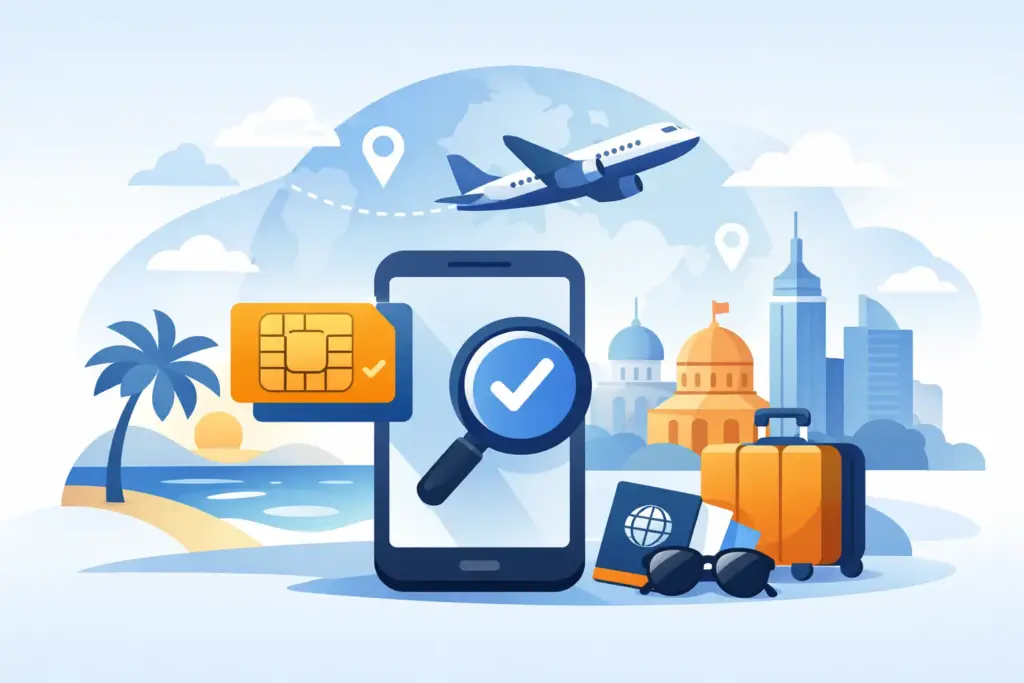
You land after a long flight, switch off airplane mode, and realize your phone still has no usable data. That moment is exactly why travel eSIM demand has taken off. People do not want to hunt for a SIM kiosk, compare confusing local plans, or risk a surprise roaming bill just to order a car or message family.
A travel eSIM fixes a real problem, but only if you buy the right one. Not every plan is as simple as the marketing makes it sound. Some are genuinely easy. Others hide limits behind the word unlimited, bury fair-use restrictions, or make activation harder than it should be.
If you want fast setup and fewer surprises, the best approach is simple: check the details before checkout, not after landing.
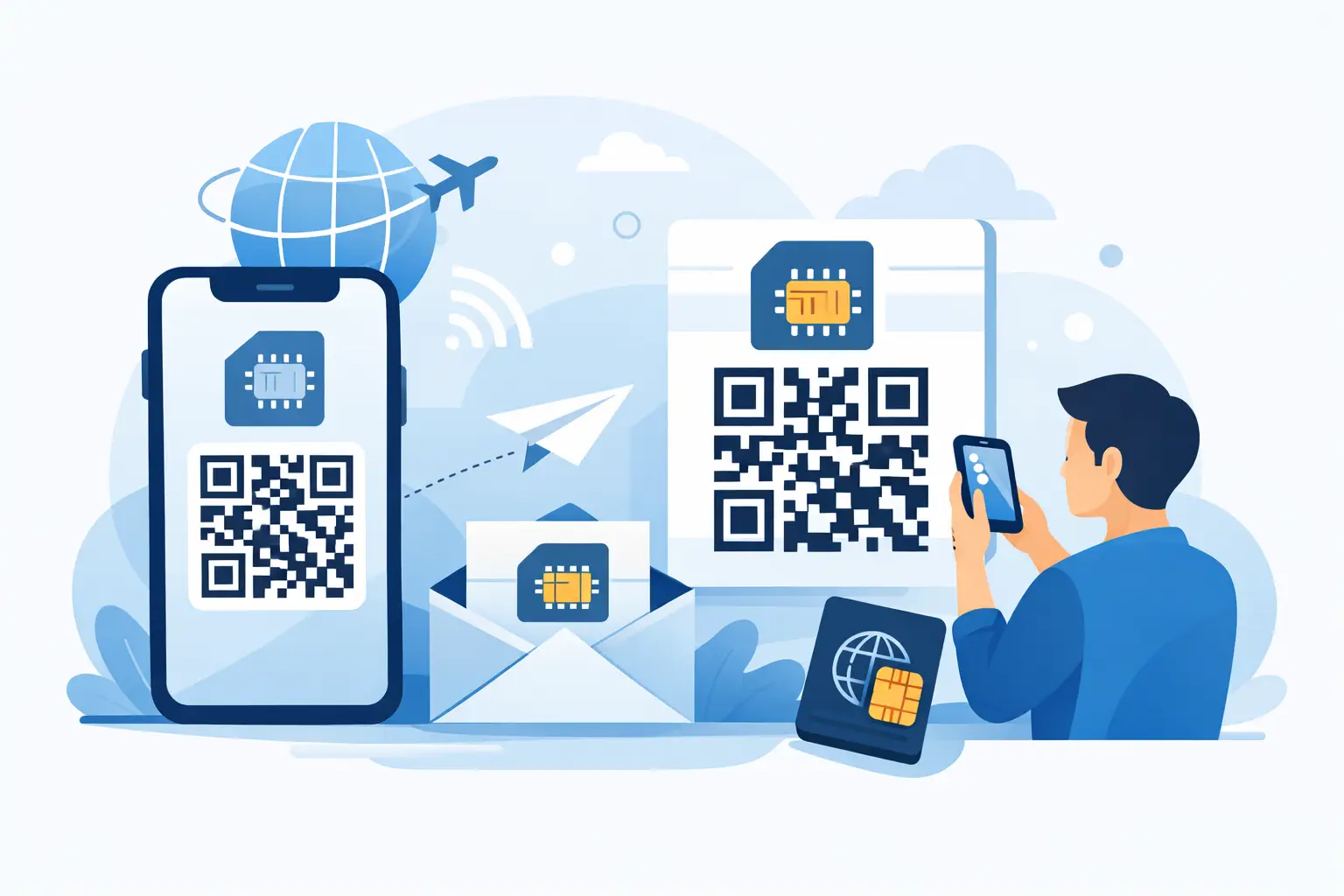
A travel eSIM is a digital mobile data plan that installs on your phone without a physical SIM card. You buy online, scan a QR code or follow an app-based setup flow, and your phone connects to a supported network when you arrive at your destination.
For most travelers, the appeal is obvious. There is no shipping delay, no plastic SIM to swap, and no need to remove your regular line. You can usually keep your primary number active for calls and texts if your carrier and device settings allow it, while using the eSIM for data abroad.
That said, most travel eSIM plans are data-only. That is not a downside if you mainly use maps, messaging apps, email, rideshare, and browser-based work tools. It only becomes an issue if you expect a traditional local phone number or standard voice minutes to be included.
Carrier roaming still works for some people, especially on short trips. But the trade-off is cost and clarity. Roaming plans often look convenient until you hit a daily fee, a soft cap, or throttled speeds that make your connection feel barely usable.
A dedicated travel eSIM usually gives you more control. You can choose a country plan, a regional plan, or a broader multi-country option based on your itinerary. You can also see the data allowance upfront, which matters more than marketing language. Five clear gigabytes is often more useful than an unlimited claim with a tiny high-speed threshold.
That is where honest providers stand apart. If a plan has a speed cap, hotspot rule, or fair-use limit, you should be able to see it before you buy. No guessing. No bill shock later.
Before comparing prices, make sure your phone supports eSIM and is carrier-unlocked. Both matter. A compatible phone that is still locked to your home carrier may not accept a travel data plan from another provider.
Most recent premium iPhone, Samsung Galaxy, and Google Pixel models support eSIM, but there are exceptions based on region and carrier version. If you are not sure, check your device settings and model details before purchase. This is the first filter because no plan is useful if your phone cannot install it.
A provider can technically cover a country without delivering a great experience everywhere in it. Big cities, airports, and transport corridors usually perform well. Rural routes, islands, mountain areas, and indoor spaces may not.
That does not mean the plan is bad. It means expectations should match your trip. If you are heading to Tokyo, Paris, or New York, network performance is usually easier to predict. If you are road-tripping through multiple regions or working from remote areas, look beyond the word coverage and check how the plan handles network access and speed limits.
This is where many travelers get burned. Unlimited can mean full speed for a small amount of data, then reduced speeds after that. Sometimes those reduced speeds are fine for messaging. Sometimes they are too slow for maps, hotspot use, or video calls.
A better plan is often the one that tells you exactly what you are getting. If you have 10GB at a published speed, you can plan around it. If you can top up easily, even better. Honest limits are easier to manage than vague promises.
Not every travel eSIM allows tethering. Some do, some limit it, and some quietly discourage it through fine print. If you plan to connect a laptop, tablet, or another phone, confirm hotspot access before purchase.
For remote workers and business travelers, this is not a small detail. A plan that looks cheap can become frustrating fast if it does not support the way you actually travel.
Some eSIMs activate when installed. Others activate when they first connect to a local network in your destination. That difference matters.
If activation starts at installation and you set it up too early, you may waste part of the plan before your trip begins. If activation starts on arrival, you get more flexibility. The provider should explain this clearly so you know when to install and when to switch the line on.
A good travel product removes friction. Buy online, receive the eSIM quickly, install it in minutes, and travel with one less thing to worry about.
The strongest providers keep the process simple. They explain how to scan the QR code, label the eSIM on your phone, choose it for mobile data, and keep your primary SIM settings straight. They also tell you what can go wrong. For example, you usually need a stable internet connection during installation, and you should not delete the eSIM once installed unless customer support tells you to.
This is also where refund policy matters. Activation can fail for real reasons – device lock issues, unsupported models, user error, or occasional provisioning problems. A refund-friendly approach signals confidence. It tells travelers they are not being left alone if setup does not go as planned.
Price matters, but context matters more. The cheapest plan on the page may save a few dollars and cost you far more in hassle.
A low price is less impressive if the data allowance is tiny, the top-up process is clunky, or the fair-use terms are hard to find. The same goes for plans that advertise broad regional coverage but perform unevenly, or plans that call themselves unlimited while restricting speed so heavily that normal travel tasks become annoying.
A better value plan is usually one with plain terms. You know the countries included, the amount of data, the validity period, the hotspot policy, and what happens when you run out. That kind of clarity is worth paying for because it lowers the odds of dealing with problems in a new place.
Frequent travelers see the biggest upside because they value speed and repeatability. They do not want to relearn a new telecom process in every country. They want a system that works the same way each time.
Digital nomads and remote workers also benefit because they depend on stable data from the moment they land. Tourists like the convenience too, especially for navigation, translation, restaurant bookings, and transit apps. Business travelers care about all of that, plus the ability to stay reachable and productive without relying on hotel Wi-Fi.
Even occasional travelers can benefit if they want more control than carrier roaming provides. The main thing is buying with realistic expectations. A data-only eSIM is perfect for many trips, but it is not a replacement for every possible mobile need.
The product itself is not the hard part anymore. The real difference is how clearly it is sold.
A trustworthy provider tells you if the plan is data-only. It tells you whether hotspot is supported, whether speeds are capped, how activation works, and what fair use actually means. It does not hide behind vague unlimited language or force you to decode telecom jargon after purchase.
That is why a straightforward approach stands out. TapSim, for example, leans into published limits, instant delivery, and no roaming traps instead of trying to dress up restrictions as perks. For travelers, that kind of honesty is not just nice to have. It is the difference between arriving prepared and arriving annoyed.
Before your next trip, treat mobile data the same way you treat flights and hotels. Check the details, choose the plan that matches how you actually use your phone, and give yourself one less problem to solve after landing.